
A commercial treadmill motor class defines the motor's continuous horsepower output, electrical current type, and duty rating that together determine whether it can handle sustained heavy gym use without overheating or failing. These three criteria, not peak horsepower marketing claims, are the true indicators of motor grade. Facility managers and fitness professionals who understand treadmill motor classification make better procurement decisions, reduce downtime, and extend equipment life. This guide covers AC versus DC motor types, continuous horsepower benchmarks, warranty signals, and selection criteria grounded in 2026 commercial equipment standards.
What are the main types of treadmill motors used in commercial gyms?
AC and DC motors represent the two fundamental categories in commercial treadmill motor types, and they perform very differently under sustained load. Knowing which type fits your facility is the first step in understanding treadmill motor grades.
AC motors: the commercial standard
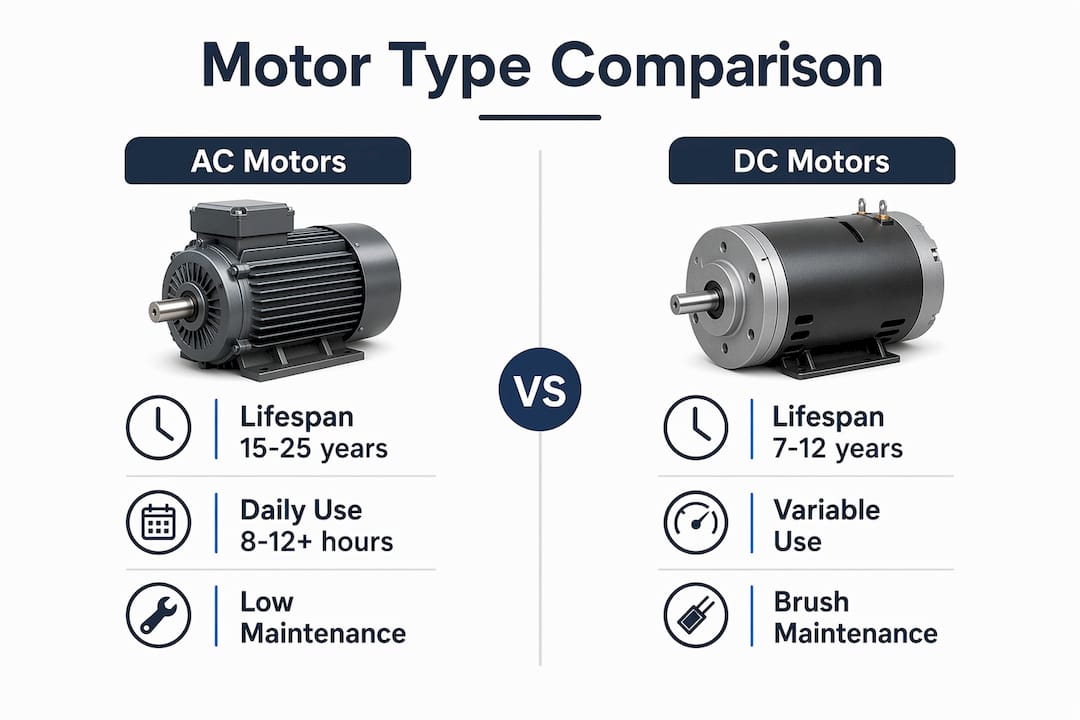
AC motors are the industry standard for commercial gyms, supporting 8–12+ hours of daily continuous operation with a lifespan of 15–25 years. That durability comes from their design. AC motors generate less heat and maintain consistent torque across the full 0–15 mph speed range, which prevents the thermal stress that kills motors in high-traffic environments. Their mean time between failures reaches 32,500 hours compared to 12,800 hours for DC motors. That gap translates directly into fewer service calls and less revenue lost to out-of-order equipment.
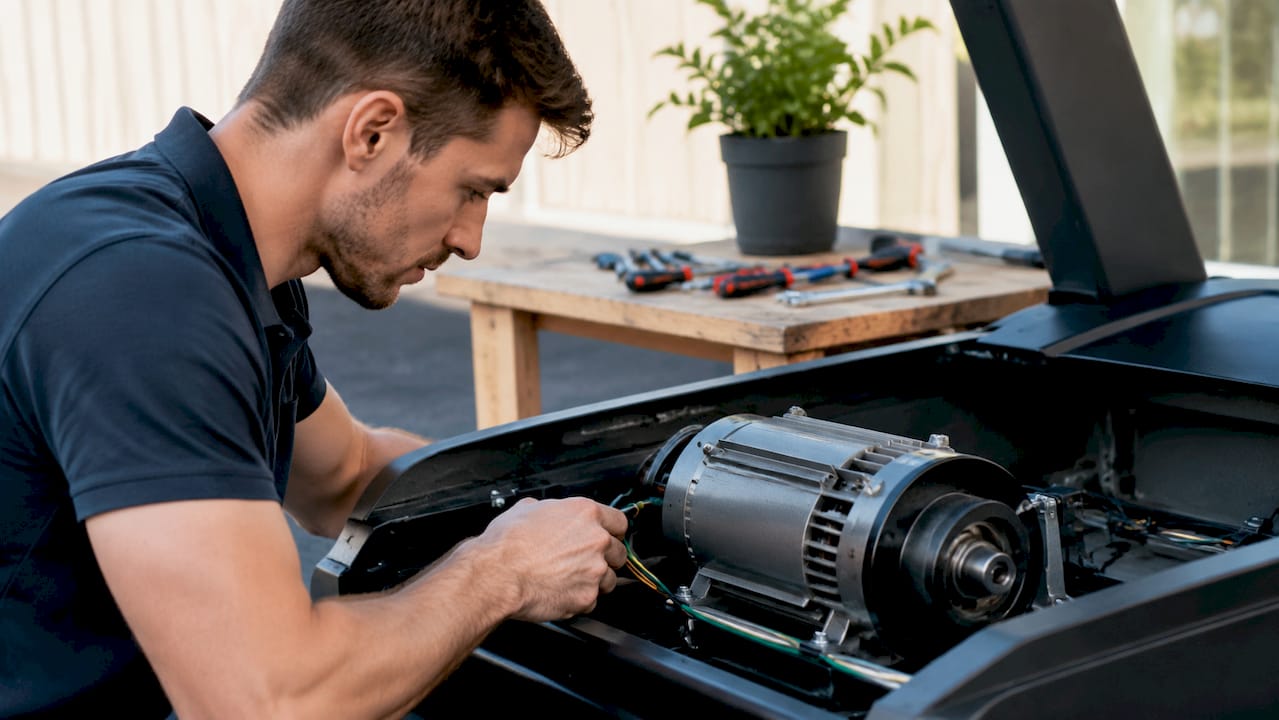
AC motors also use sealed bearings that typically require no servicing within the first several years of operation. Brands like Life Fitness, Precor, and Technogym build their flagship commercial lines around AC drive systems for exactly this reason. If your facility runs treadmills for more than six hours a day, AC is the correct motor class.
DC motors: brushed and brushless
DC motors divide into two subtypes with very different maintenance profiles. Traditional brushed DC motors require brush replacements around 24–36 months in commercial settings. That maintenance window is predictable but adds labor cost and downtime. Brushed DC motors suit boutique studios or low-traffic facilities where treadmills run fewer than four hours daily.
Brushless DC motors are an emerging technology offering near-silent operation and a maintenance-free profile comparable to AC motors. They eliminate mechanical contact points, which extends lifespan and reduces friction-related heat. For facilities that want DC responsiveness with lower maintenance demands, brushless DC is worth evaluating. That said, AC motors still hold the durability edge for facilities running 100 or more users per day.
Motor type comparison
| Motor Type | Lifespan | Daily Use Limit | Maintenance Need | Best Fit |
|---|---|---|---|---|
| AC | 15–25 years | 8–12+ hours | Minimal (sealed bearings) | High-traffic commercial gyms |
| Brushless DC | 10–18 years | 6–8 hours | Low (no brush replacement) | Mid-traffic boutique studios |
| Brushed DC | 7–12 years | 4–6 hours | Moderate (brush replacement every 24–36 months) | Low-traffic or light commercial |
Pro Tip: Always ask the vendor for the motor's MTBF rating, not just the warranty length. MTBF tells you how the motor performs under real load conditions.
How is treadmill motor class determined by continuous horsepower and duty rating?
Continuous horsepower, abbreviated as CHP, is the only reliable metric for sustained motor output under load. Peak horsepower ratings lack standardized measurement methodology and can inflate power claims by 40–60%. A motor advertised at 4.0 peak HP may deliver only 2.2 CHP under real operating conditions. That gap matters enormously when a 200-pound user runs at 8 mph for 45 minutes.
CHP benchmarks by facility size
The minimum motor CHP for commercial gym treadmills is 3.0 CHP, with 4.0–6.0 CHP recommended for facilities with over 100 daily users. Facilities with over 150 daily users typically require 3.0–6.0 CHP AC motor systems. Matching CHP to traffic volume is not optional. Under-powered motors degrade faster and fail earlier, regardless of the brand name on the console.
| Facility Size | Daily Users | Recommended CHP | Motor Type |
|---|---|---|---|
| Small studio | Under 30 | 3.0 CHP | Brushless DC or AC |
| Mid-size gym | 30–100 | 3.5–4.0 CHP | AC |
| Large commercial gym | 100–150 | 4.0–5.0 CHP | AC |
| High-traffic facility | 150+ | 5.0–6.0 CHP | AC |
Why duty rating matters as much as CHP
CHP alone does not guarantee commercial durability. Only motors with an independent duty rating withstand high-traffic commercial use without overheating and torque loss. An independent duty rating means a third party has verified the motor can sustain its rated output for 8–12 continuous hours. Without that certification, a motor may carry a commercial label but perform like a residential unit.
Key points to verify before purchasing:
- Request the CHP rating in writing, not the peak HP figure
- Confirm the motor carries an independent duty rating for continuous commercial operation
- Check that the CHP aligns with belt size, max user weight (350–400 lbs), and speed range (up to 15 mph)
- Reject any spec sheet that lists only peak horsepower with no CHP disclosure
Pro Tip: If a vendor cannot provide a CHP figure and an independent duty rating certificate, treat the motor as residential grade regardless of how it is marketed.
What warranty and maintenance factors reveal treadmill motor quality?
Warranty terms are the manufacturer's public statement about how long a motor should last under normal commercial use. Commercial treadmill warranties generally cover motors for 5–10 years, with longer warranties indicating higher-quality, commercial-grade motors. Residential or light commercial motors typically carry only 3–5 year motor warranties. That two-year gap reflects real differences in component quality and thermal management design.
A complete warranty picture covers more than just the motor. Frame, belt, and motor warranties together indicate equipment quality, with motors covered for 5–10 years, frames often for the lifetime of the unit, and parts for 2–5 years. When a manufacturer offers a lifetime frame warranty but only a two-year motor warranty, that mismatch signals a weak motor specification.
Signs of under-specification in commercial motors
Under-spec commercial treadmill motors typically overheat within 1,500–2,000 hours of use, resulting in torque loss and eventual failure. That is the clearest sign a motor was not built for its stated duty class. Watch for these indicators:
- Motor housing becomes hot to the touch after 30–45 minutes of use
- Belt speed fluctuates under load without console input
- Treadmill trips the circuit breaker during peak usage hours
- Motor produces a burning smell after extended sessions
- Console displays error codes related to motor temperature or current draw
Brush replacement is a known failure point in traditional DC motors, often required after 24–36 months in commercial settings. AC motors with sealed bearings do not require servicing in that same window. When evaluating service agreements, confirm whether the contract covers brush replacement, bearing inspection, and motor controller diagnostics, not just belt lubrication.
How to select the right commercial treadmill motor class for your facility
Selecting the correct motor class starts with an honest assessment of your facility's daily operational demands. Motor-related downtime impacts member satisfaction and operational revenue more significantly than the initial motor investment cost. A $300 savings on a lower-spec motor that fails in 18 months costs far more in repair labor, member complaints, and replacement parts.
Follow this selection process:
- Count your daily active users per treadmill. Divide total daily treadmill sessions by the number of units. If each machine averages more than 10 sessions per day, you need a minimum 4.0 CHP AC motor.
- Calculate daily operating hours. Facilities open 16–18 hours daily need AC motors with independent duty ratings. Anything less risks thermal failure during peak hours.
- Request CHP documentation from every vendor. Do not accept peak HP figures. Ask for the CHP spec sheet and the independent duty rating certificate before comparing prices.
- Match motor class to your commercial treadmill failures history. If your current fleet shows recurring motor issues, the root cause is almost always under-specification, not bad luck.
- Evaluate total cost of ownership over five years. Include motor warranty coverage, expected brush replacement costs for DC units, and estimated downtime per unit per year. AC motors with 5–10 year warranties consistently win this calculation for high-traffic facilities.
- Ask vendors about parts availability. A 10-year motor warranty means nothing if replacement controllers or stators are discontinued after year four. Confirm parts supply chains before signing purchase orders.
Choosing motors with proper CHP and an independent duty rating is the single most effective way to reduce unplanned maintenance across a multi-unit facility.
Key Takeaways
Commercial treadmill motor class is determined by continuous horsepower, motor type, and independent duty rating. These three factors together define whether a motor will perform reliably under real commercial gym conditions.
| Point | Details |
|---|---|
| AC motors dominate commercial use | AC motors support 8–12+ hours of daily operation with a lifespan of 15–25 years. |
| CHP beats peak HP every time | Always request continuous horsepower ratings; peak HP claims can inflate figures by 40–60%. |
| Duty rating is non-negotiable | Only motors with an independent duty rating are verified for sustained commercial operation. |
| Warranty length signals quality | Commercial-grade motors carry 5–10 year warranties; residential motors offer only 3–5 years. |
| Under-spec motors cost more long-term | Motors that overheat within 1,500–2,000 hours generate downtime costs that exceed initial savings. |
What I've learned from years of commercial motor failures in South Texas
The most common mistake I see facility managers make is buying on peak horsepower. A gym owner in McAllen once showed me a spec sheet for a "commercial" treadmill rated at 4.5 HP. When I asked for the CHP figure, there wasn't one. That motor failed in 14 months under moderate daily use. The replacement cost, including labor and lost member goodwill, was triple what a proper AC unit would have added to the original purchase price.
The second mistake is treating all AC motors as equal. An AC motor without an independent duty rating is just a residential motor with better marketing. I've pulled motors out of machines that were labeled "commercial grade" but had no duty certification and no CHP documentation. They looked identical to certified units on the outside. The difference showed up at hour 1,800 when the windings burned out.
Brushless DC motors are genuinely interesting right now. They're closing the gap with AC in terms of maintenance profile, and I expect them to become a real option for mid-traffic facilities within the next few years. But for any facility running more than 80 users per day, AC with a verified duty rating is still the correct answer. The technology is proven, the parts are available, and the warranty terms reflect real-world durability.
My practical advice: build a motor spec checklist before you talk to any vendor. CHP rating, independent duty certification, motor warranty length, and parts availability. If a vendor can't answer all four questions clearly, move on.
— Steve
Treadmill motor support for South Texas commercial facilities
Knowing your motor class is only half the equation. Keeping those motors running through regular diagnostics and timely repairs is what actually protects your facility's uptime and your members' experience.

Texastreadmillrepair provides certified motor diagnostics, repair, and full replacement services for commercial treadmill fleets across South Texas. Whether you're managing a single studio or a multi-unit gym floor, their technicians come directly to your facility with same-week appointments and flat-rate pricing. No surprise invoices, no transportation hassle. Their commercial treadmill repair services cover motor assessments, controller diagnostics, and component replacement with a 90-day warranty on all parts and labor. If you're unsure whether a motor is worth repairing, their repair vs. replacement guide gives you a clear framework before you spend a dollar.
FAQ
What is a commercial treadmill motor class?
A commercial treadmill motor class is a classification based on continuous horsepower output, motor type (AC or DC), and independent duty rating that defines the motor's ability to sustain heavy daily use without failure.
What CHP rating do I need for a busy commercial gym?
Facilities with over 100 daily users need a minimum of 4.0 CHP, and those with over 150 daily users should specify 5.0–6.0 CHP AC motor systems to maintain reliable operation.
Why is continuous horsepower more important than peak horsepower?
Peak horsepower lacks standardized testing and can overstate actual output by 40–60%. Continuous horsepower measures sustained real-world performance under load, which is the only figure that predicts commercial durability.
How long should a commercial treadmill motor last?
AC motors in commercial settings last 15–25 years with proper maintenance. Brushed DC motors typically last 7–12 years and require brush replacement every 24–36 months in commercial use.
What warranty should a commercial treadmill motor carry?
A genuine commercial-grade motor should carry a 5–10 year warranty. A warranty shorter than five years on a motor marketed as commercial grade is a sign of under-specification.