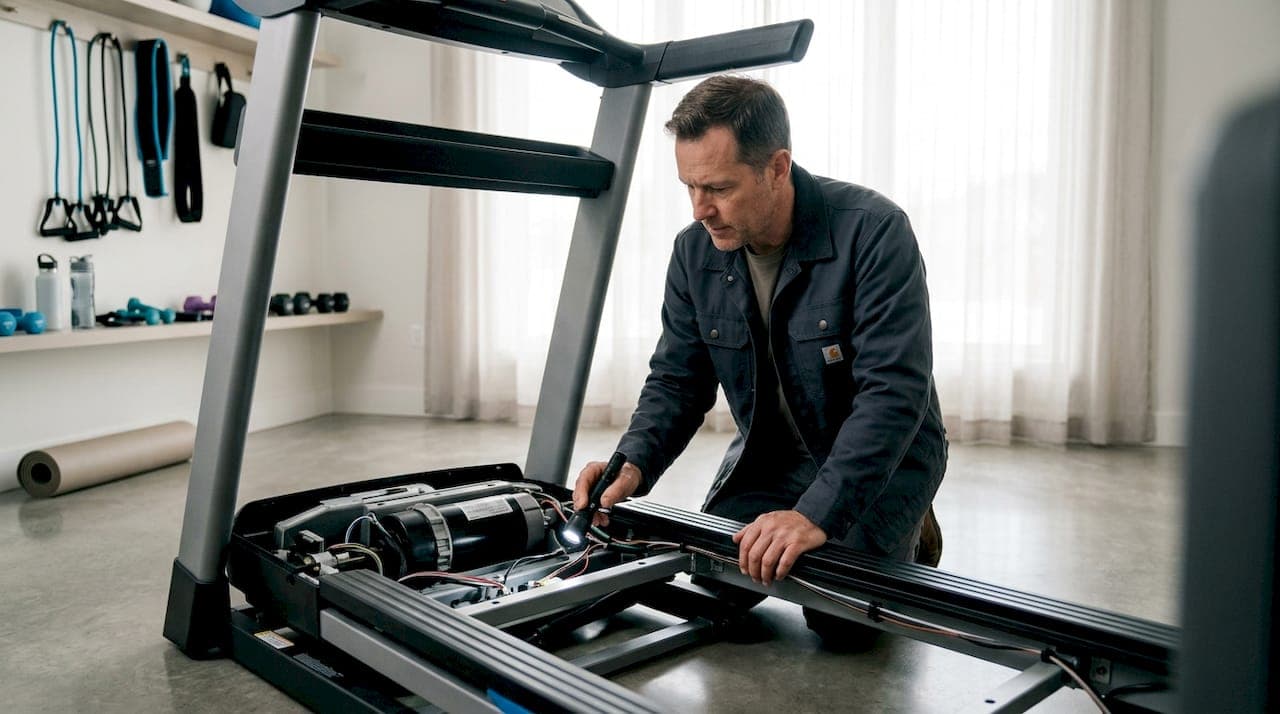
Repairable vs unrepairable treadmill signs are determined primarily by visible structural damage, unusual motor noises, electronic failure patterns, and repair cost ratio relative to replacement value. Knowing which category your treadmill falls into saves you from spending $800 on a machine worth $600, or worse, running on equipment that poses a real safety risk. This guide walks through every major treadmill repair indicator, from frame cracks to console error codes, so you can make a confident call before calling a technician or ordering parts.
1. Repairable vs unrepairable treadmill signs: the core framework
The distinction between a repairable and an unrepairable treadmill is not simply whether something is broken. Repairability depends on parts availability, warranty coverage, and how modular the machine's design is. A treadmill with a snapped belt and available replacement parts is repairable in an afternoon. A treadmill with a cracked frame or discontinued control board is effectively a write-off, regardless of how good the motor sounds.
Three factors drive every repair decision: safety, cost, and parts access. If any one of these fails the test, replacement becomes the smarter move. The sections below break down each major system so you can assess your machine the same way a certified technician would.
2. Structural and safety issues that signal replacement
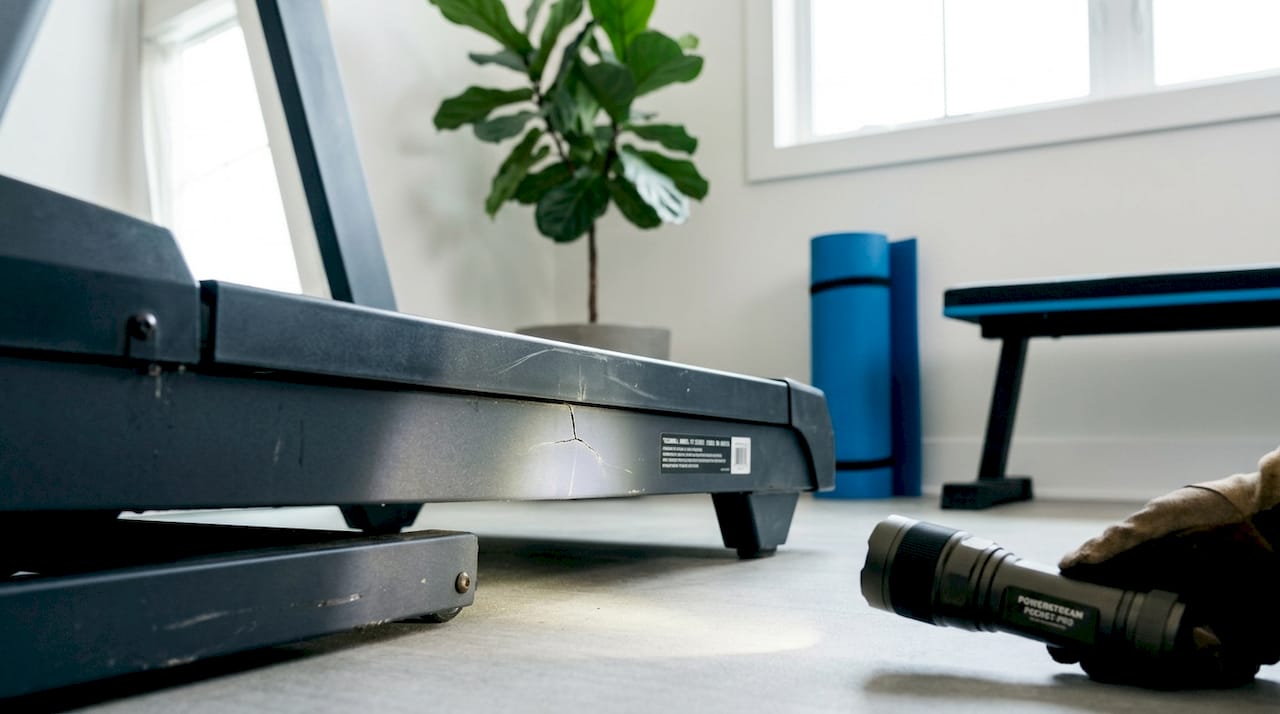
Frame integrity is the first thing to check, and the most unforgiving. Visible frame stress cracks or weld repairs mean the treadmill is structurally compromised and unsafe, regardless of price. No belt swap or motor rebuild changes that verdict. A cracked frame under load can fail suddenly, and the consequences at 6 mph are serious.
Run your hand along the full length of the frame rails and check every weld point. Look for:
- Hairline cracks near the motor housing or rear roller mounts
- Weld seams that show signs of separation or rust penetration
- Frame flex when you press down firmly on the deck corners
- Missing or non-functional emergency stop clips and safety tether attachments
- Bent or warped uprights on the console support arms
Pro Tip: Shine a flashlight at a low angle along the frame rails. Cracks that are invisible under overhead lighting become obvious when light skims the surface at an angle.
Safety-first standards require rejecting treadmills with structural cracks or missing safety stops even when other components look functional. A machine that passes every other test but lacks a working emergency stop is still a liability. Learn more about how hidden structural damage affects safety and repairability before making any decision.
3. Motor and drive system symptoms: repair or walk away?
Motor noise is one of the clearest treadmill repair indicators available to any owner without tools. The diagnostic method is simple: run the machine at 6 to 8 mph for two to three minutes and listen carefully. Grinding, whining, or rhythmic clicking under load points to motor or drive system failure, and these faults are often unpredictable in cost and scope.
Here is how to read what you hear:
- Soft hum with no variation — Normal. Belt and motor are operating within spec.
- Rhythmic clicking that matches belt speed — Belt seam issue or debris under the deck. Repairable.
- High-pitched whine under load — Bearing wear in the motor or front roller. Often repairable if caught early.
- Grinding that worsens with speed — Drive belt slipping or motor brush failure. Borderline; get a diagnosis.
- Loud grinding with speed fluctuation — Motor controller or drive system failure. Likely costly.
- Burning smell with any noise — Stop immediately. Motor overheating is a serious red flag.
Timed listening tests conducted by experienced technicians distinguish normal belt noise from impending drive system failure, which is exactly why a two-minute run test matters more than a static inspection. Motor replacements on mid-range home treadmills typically run $300 to $500 in parts alone. If the motor is failing on a machine worth $700, you are already approaching the 50% cost threshold that signals replacement.
4. Console and electronic control issues: what's fixable?
Console problems range from a loose wire to a $2,000 discontinued control module, so diagnosis matters before any repair decision. Start by cycling through every program, adjusting incline through its full range, and confirming the speed display tracks accurately. These tests take three minutes and reveal most electronic faults without opening the machine.
Most console and control issues are repairable when parts are available. Modular systems allow replacement of individual circuit boards at $200 to $400. The problem arises when a manufacturer discontinues a proprietary module, pushing replacement costs to $2,000 or more. At that point, the machine becomes economically unrepairable even if it runs fine mechanically.
Pro Tip: Before assuming a console board is dead, search the model number plus "replacement board" on eBay and Amazon. If no results appear from any seller, that part is likely discontinued and the machine is a strong replacement candidate.
Error indication lights on PCBs correspond to specific hardware faults. Some errors clear with a reset. Others, particularly those tied to MOSFET or controller shorts, require full board replacement. Write down any error codes before powering the machine off. Those codes tell a technician exactly where to look and can cut diagnostic time significantly.
A power-on failure is a diagnosis problem, not an automatic replacement trigger. The repair cost could be a $50 loose connector or a $1,500 console board. Never assume the worst until a technician checks the wiring harness first.
5. Cost thresholds: when repair stops making sense
The most reliable financial rule in treadmill maintenance is the 50% guideline. If estimated repair cost exceeds 50% of the price of a comparable new treadmill, replacement is typically the more economical choice. This rule applies regardless of brand loyalty or sentimental attachment to the machine.
Here is a practical cost reference for common repairs:
| Repair Type | Typical Cost Range | Replacement Signal |
|---|---|---|
| Belt and deck replacement | $200 to $400 plus labor | No, if machine is under 7 years old |
| Motor replacement | $300 to $500 parts only | Yes, if machine value is under $800 |
| Console board (modular) | $200 to $400 | No, if parts are available |
| Console board (discontinued) | $1,500 to $2,000+ | Yes, almost always |
| Frame repair (welding) | Varies, safety risk remains | Yes, structural integrity compromised |
Age and maintenance history also factor into this calculation. Well-maintained commercial treadmills can run 15 to 25 years with proper service. A home treadmill with no service history and visible wear at the 8-year mark is a much weaker repair candidate than a well-documented machine of the same age. Review your treadmill deck replacement options before committing to a full machine swap, since deck and belt work alone often restores performance at a fraction of replacement cost.
6. Quick-reference list of repairable and unrepairable signs
Knowing the signs at a glance helps you make faster decisions, especially when a technician is standing in front of you with a quote.
Signs that are typically repairable:
- Fraying or stiff belt with visible deck wear under the foot strike zone
- Rhythmic clicking tied to belt speed
- Console display flickering or losing segments
- Incline motor not responding but error code is present
- Speed sensor faults with available replacement sensors
- Loose or corroded wiring connections
- Worn roller bearings with parts available
Signs that indicate replacement is likely necessary:
- Visible frame cracks, weld failures, or structural flex
- Missing or non-functional emergency stop system
- Motor grinding with speed fluctuation and burning smell
- Discontinued console board with no aftermarket alternative
- Deck delamination across the full running surface
- Repeated motor controller failures within 12 months
- Water or moisture damage to the main control board
"The machines that surprise owners most are the ones that look fine on the outside but have frame flex or missing safety features underneath. A treadmill that passes a visual check but fails a hands-on structural test is the most dangerous kind." — Total Fitness Outlet, 25-Year Operator's Inspection Checklist
For home treadmills under five years old, most belt, roller, and sensor issues fall into the repairable category. For commercial machines over 10 years old without service records, structural and electronic faults lean toward replacement. The age of the machine matters less than the availability of parts and the integrity of the frame.
Key takeaways
Repairable treadmill faults are defined by parts availability, cost below the 50% threshold, and intact structural integrity. Unrepairable machines fail on frame safety, discontinued electronics, or repair costs that exceed replacement value.
| Point | Details |
|---|---|
| Frame cracks are dealbreakers | Structural damage makes a treadmill unsafe regardless of other component condition. |
| Use the 50% cost rule | Repairs exceeding half the replacement price signal it is time to buy new. |
| Run a noise test at 6 to 8 mph | Grinding or whining under load points to motor or drive failure requiring diagnosis. |
| Console repairability depends on parts | Modular boards at $200 to $400 are fixable; discontinued modules push toward replacement. |
| Maintenance history predicts repairability | Machines with documented service records are stronger repair candidates at any age. |
What I've learned after years of treadmill repair decisions
The mistake I see most often is owners treating every fault as either fully fixable or completely hopeless. The reality sits in the middle almost every time. A machine with a dead console and a perfect motor is a parts-sourcing problem, not a replacement problem. A machine with a cracked frame and a brand-new belt is still a safety hazard you should not step on.
The sign owners miss most consistently is frame flex. They check the belt, listen to the motor, test the console, and never press down hard on the deck corners to feel whether the frame moves. That flex is the quiet warning that a weld is failing. By the time it becomes visible, the machine has already been unsafe for months.
My honest advice: if you are unsure whether a fault is repairable, spend $75 to $100 on a professional diagnostic before spending $400 on parts. A certified technician will tell you in 20 minutes whether the machine is worth saving. That diagnostic fee is the cheapest insurance you can buy against a $400 mistake in either direction. DIY repairs make sense for belts, rollers, and sensors. They do not make sense for motor controllers, frame integrity, or anything involving the main PCB.
— Steve
Get a professional diagnosis before you decide
Uncertain whether your treadmill is worth repairing? The difference between a $150 fix and a $1,500 mistake often comes down to a proper diagnosis from someone who has seen the fault before.

Texastreadmillrepair sends certified technicians directly to your home or gym in South Texas, with same-week appointments and flat-rate pricing so you know the cost before any work begins. Their team handles everything from slipping belts and overheating motors to unresponsive consoles, and every repair comes with a 90-day warranty on parts and labor. Check out their full treadmill repair services to see what a professional diagnostic covers, or visit Texastreadmillrepair to book a same-week appointment in South Texas.
FAQ
What are the clearest signs a treadmill is unrepairable?
Visible frame cracks, weld failures, and missing emergency stop systems are the clearest unrepairable signs. These structural and safety faults cannot be economically or safely corrected regardless of the machine's other condition.
How do I know if my treadmill motor needs replacing?
Run the machine at 6 to 8 mph for two to three minutes and listen for grinding, whining, or rhythmic clicking. These sounds under load indicate motor or drive system failure that requires professional diagnosis before repair or replacement.
What is the repair cost rule for treadmills?
If the estimated repair cost exceeds 50% of the price of a comparable new treadmill, replacement is typically the more economical choice. This threshold applies to all repair types, including motor, console, and deck work.
Can a treadmill console be repaired if it stops working?
Most console faults are repairable when replacement parts are available, with modular circuit boards costing $200 to $400. If the manufacturer has discontinued the control module and no aftermarket alternative exists, the machine is effectively unrepairable on the electronics side.
How long should a treadmill last with proper maintenance?
Well-maintained commercial treadmills can operate for 15 to 25 years. Home treadmills with documented service histories are stronger repair candidates than machines of the same age with no maintenance records.