
A burning smell from your treadmill motor is a direct warning sign of overheating caused by friction, electrical faults, or dust buildup, and it requires you to unplug the machine immediately before doing anything else. The treadmill motor burning smell solution almost always starts with that single step. Skipping it risks fire, motor damage, and personal injury. Most causes fall into two categories: friction from a dry or misaligned belt, and electrical issues from worn components or loose connections. Both are fixable, and this guide walks you through diagnosing and resolving each one safely.
What causes a treadmill burning smell and how to identify it
The first thing you need to do is figure out what kind of burning smell you are dealing with. The odor type tells you whether you can proceed with DIY maintenance or need to call a certified technician right away.
Friction smell vs. electrical smell
A friction-related burning smell is rubbery, warm, and similar to the scent of a hot tire on pavement. It typically comes from a dry walking belt grinding against the deck or a slipping drive belt creating friction that forces the motor to work harder than it should. An electrical burning smell is sharper, more chemical, and often resembles melting plastic or singed wiring. According to ExercisePick, electrical odors require immediate unplugging and professional inspection. Do not attempt any maintenance if you detect that sharp chemical odor.
Visual signs to look for after unplugging
Once the treadmill is unplugged and cooled down for at least 15 minutes, inspect these areas:
- Belt surface: Look for glazing, cracking, or dark scorch marks along the underside of the walking belt.
- Motor compartment: Remove the motor cover and check for dust accumulation, which restricts airflow and causes overheating.
- Power cord and outlet connection: Check for discoloration, melting, or a loose fit at the wall plug. A CPSC recall in early 2026 flagged loose power cord connections on tens of thousands of Matrix Retail and Vision treadmills as fire hazards.
- Burnt components: Look for any visibly charred wiring or melted plastic near the motor board.
Pro Tip: Photograph the motor compartment before touching anything. If you later need a technician, those photos speed up diagnosis significantly.
How to fix friction-related burning smells with lubrication and cleaning
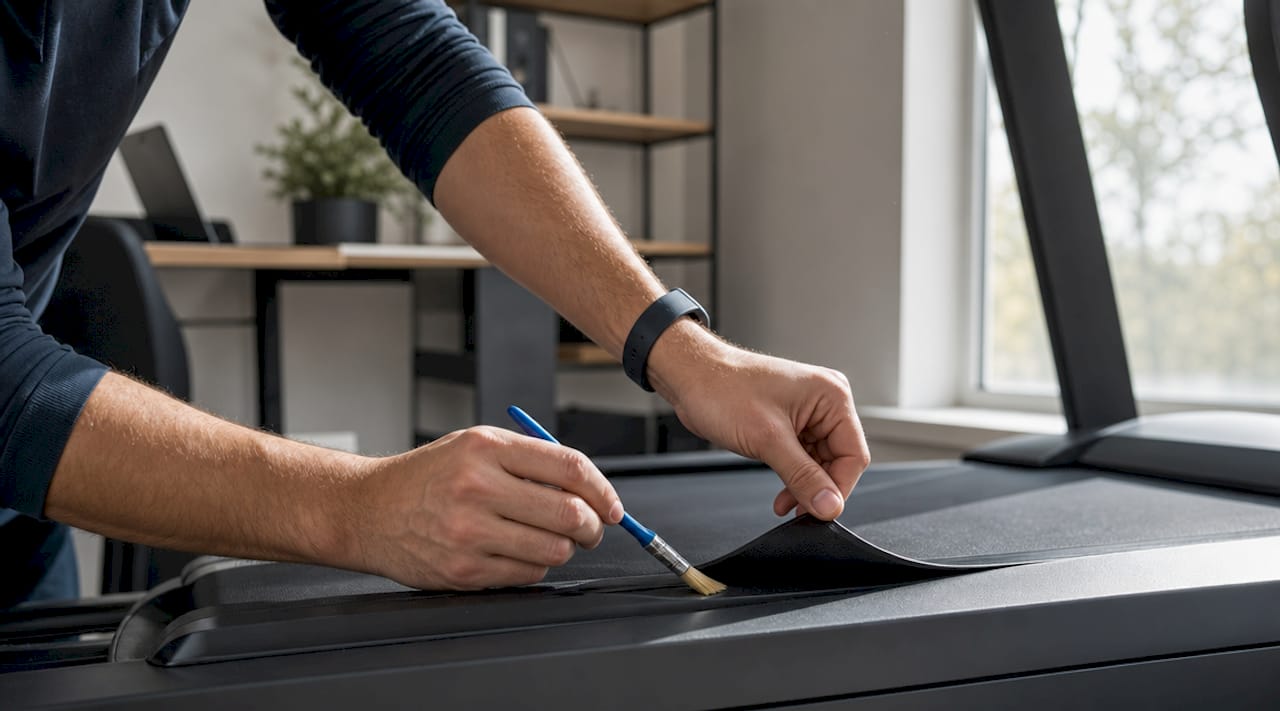
If the smell is rubbery and the visual inspection shows a dry belt or dusty motor vents, you are dealing with a friction problem. This is the most common treadmill motor overheating quick fix, and you can handle it yourself in under 30 minutes.
Step-by-step lubrication and cleaning process
- Unplug the treadmill and wait for it to cool completely.
- Clean the motor vents using a soft brush or compressed air to remove dust and debris. Blocked vents are a leading cause of motor overheating and burning odors.
- Lift the walking belt by loosening the rear roller bolts slightly, then slide your hand or a lubrication applicator under the belt to reach the deck surface.
- Apply 20 to 30 ml of treadmill-specific silicone lubricant along the center of the deck. Never use WD-40, petroleum-based oils, or general-purpose sprays. These degrade the belt material and create worse friction over time.
- Plug in and run the treadmill at 2 to 3 mph for two minutes to distribute the lubricant evenly across the deck surface.
- Re-check belt tension. A belt that is too tight creates excessive drag on the motor. A belt that is too loose slips and generates heat. The correct tension allows about one inch of lift at the belt's center edge.
Pro Tip: Run the treadmill slowly after lubrication before stepping on it. This spreads the silicone oil evenly and prevents pooling, which can cause uneven friction spots that continue to stress the motor.
Recommended maintenance frequency
| Maintenance Task | Recommended Frequency |
|---|---|
| Belt lubrication | Every 3 months or every 40 hours of use |
| Motor vent cleaning | Every 1 to 2 months |
| Belt tension check | Every 3 months |
| Full motor compartment inspection | Every 6 months |
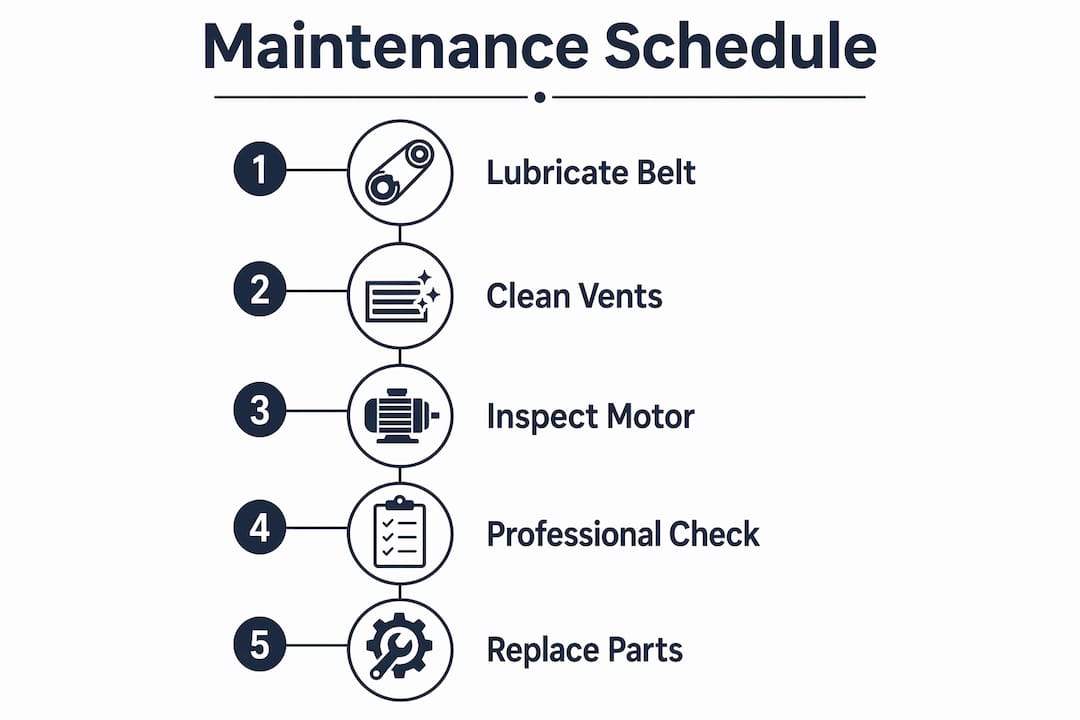
Consistent maintenance prevents the insufficient belt lubrication that ExercisePick identifies as the top cause of motor overheating. A dry belt forces the motor to draw more current than it was designed for, which accelerates wear and produces that unmistakable burning odor.
When does a burning smell mean you need professional help?
Not every burning smell is a lubrication problem. Several symptoms point to motor or electrical issues that go beyond what a cleaning and lube job can fix. Recognizing these signs early prevents a minor repair from turning into a full motor replacement.
Symptoms that require a certified technician
- Thermal shutdown cycles: Your treadmill runs for a few minutes, shuts off, and restarts after cooling down. This is the thermal protection sensor doing its job, but it signals an underlying overheating problem that needs diagnosis.
- Unusual motor noises: Grinding, squealing, or clicking from the motor compartment alongside a burning smell points to bearing failure or a damaged motor brush.
- Burning smell with no visible dust or dry belt: If the belt is lubricated and the vents are clean but the smell persists, the motor controller board or capacitor may be failing.
- Visible burn marks or melted wiring: This is a stop-everything situation. Do not use the treadmill until a technician has inspected it.
- Power cord discoloration or loose fit: Given the 2026 recall affecting Matrix Retail and Vision models, inspect your power cord carefully. A loose or overheating cord is a fire risk that requires immediate replacement, not a workaround.
Safety rule: If you smell sharp electrical burning, see smoke, or notice any melted components, do not attempt to restart the treadmill. Unplug it, move away from the machine, and contact a certified repair service. No workout is worth a house fire.
Understanding when the treadmill overheating reasons point to a deeper problem is the difference between a $50 maintenance visit and a $400 motor replacement.
Common mistakes treadmill owners make when fixing burning smells
Most treadmill owners who try to fix a burning smell on their own make one of four predictable mistakes. Avoiding them saves time, money, and equipment.
The four mistakes that make things worse
- Over-lubricating the belt. More is not better. Applying too much silicone oil causes it to migrate onto the belt surface, which reduces traction and creates new friction points. FitnessLume specifically cautions that excessive lubricant can mask friction spots rather than eliminate them.
- Skipping the unplug step. Inspecting a treadmill while it is still plugged in is dangerous. Even with the power off at the console, the machine carries live current. Unplug from the wall before touching any internal component.
- Assuming motor failure without checking the belt first. Motor overheating most often results from upstream friction issues like belt tension or dust accumulation, not from the motor itself failing. Replacing a motor without addressing the root cause means the new motor burns out just as fast.
- Ignoring ventilation around the machine. Placing a treadmill against a wall or in a closet with poor airflow creates an environment where heat cannot escape. The motor runs hotter, the thermal sensor trips more often, and the burning smell returns within weeks. Give your treadmill at least 18 inches of clearance on all sides.
Pro Tip: Set a calendar reminder every three months for belt lubrication and vent cleaning. Reactive repairs after a burning smell cost three to five times more than scheduled maintenance. Checking your treadmill for hidden damage twice a year catches problems before they produce smoke.
Key takeaways
A treadmill motor burning smell is almost always caused by friction from a dry belt or dust-blocked vents, and both problems are preventable with a consistent maintenance schedule.
| Point | Details |
|---|---|
| Unplug first, always | Disconnect from the wall before any inspection or maintenance to prevent electrical injury. |
| Identify the odor type | Rubbery smell means friction; sharp chemical smell means electrical fault requiring a technician. |
| Lubricate correctly | Apply 20 to 30 ml of silicone oil every three months and run the belt slowly to distribute it evenly. |
| Clean motor vents monthly | Dust buildup restricts airflow and is one of the most common causes of motor overheating. |
| Know when to stop DIY | Thermal shutdowns, unusual noises, and visible burn marks require certified professional diagnosis. |
What 15 years of treadmill repairs taught me about burning smells
The first thing I tell every treadmill owner who calls about a burning smell is this: the smell is almost never the motor's fault. In my experience, roughly eight out of ten cases trace back to a belt that has not been lubricated in over a year, or a motor compartment so packed with dust that the fan cannot move air. The motor gets blamed because it is the most expensive component. But it is usually the victim, not the cause.
What surprises most people is the power cord. I have walked into homes where the treadmill smelled like burning plastic, and the belt was perfectly lubricated and the vents were clean. The culprit was a loose connection at the wall outlet or a cord that had been pinched under the machine's frame for years. The 2026 recall on Matrix Retail and Vision models was a wake-up call for the industry, but loose cord connections are a problem across brands. I check the power cord on every single service call now, regardless of what the customer reports.
The other thing I push hard on is maintenance schedules. Most people only think about their treadmill when something goes wrong. A 20-minute maintenance session every three months prevents the kind of recurring repair failures I see when owners fix a symptom but not the cause. If you have had a burning smell once, treat it as a signal that your maintenance routine needs rebuilding from scratch, not just a one-time fix.
— Steve
Get your treadmill inspected by a certified technician
If you have worked through the lubrication and cleaning steps and the burning smell persists, or if you detected a sharp electrical odor at any point, the safest next step is a professional inspection.

Texastreadmillrepair sends certified technicians directly to your home or gym in South Texas, with same-week appointments and flat-rate pricing so you know the cost upfront. Their team diagnoses motor overheating, belt wear, and electrical issues in a single visit, backed by a 90-day warranty on parts and labor. Before you decide whether to repair or replace, check the repairable vs. unrepairable signs guide to understand what you are working with. For immediate service, visit the treadmill repair services page and book your appointment today.
FAQ
What is the first thing to do when my treadmill smells like burning?
Unplug the treadmill from the wall outlet immediately. Do not attempt to inspect or restart the machine until it has cooled for at least 15 minutes.
How do I know if the burning smell is electrical or friction-related?
A rubbery, warm odor points to belt friction and is usually fixable with lubrication and cleaning. A sharp, chemical smell resembling melting plastic signals an electrical fault and requires a certified technician.
How often should I lubricate my treadmill belt to prevent burning smells?
Apply 20 to 30 ml of treadmill-specific silicone lubricant every three months or every 40 hours of use, then run the belt slowly for two minutes to distribute it evenly across the deck.
Can dust buildup really cause a treadmill motor to overheat?
Yes. Dust and debris around motor vents restrict airflow directly, causing the motor to run hot and produce a burning odor. Cleaning the vents monthly is one of the most effective overheating prevention steps.
When should I stop trying to fix the burning smell myself?
Stop DIY attempts if you see visible burn marks, melted wiring, or smoke, or if the treadmill shuts down repeatedly after a few minutes of use. These symptoms indicate motor or electrical component failure that requires professional diagnosis.