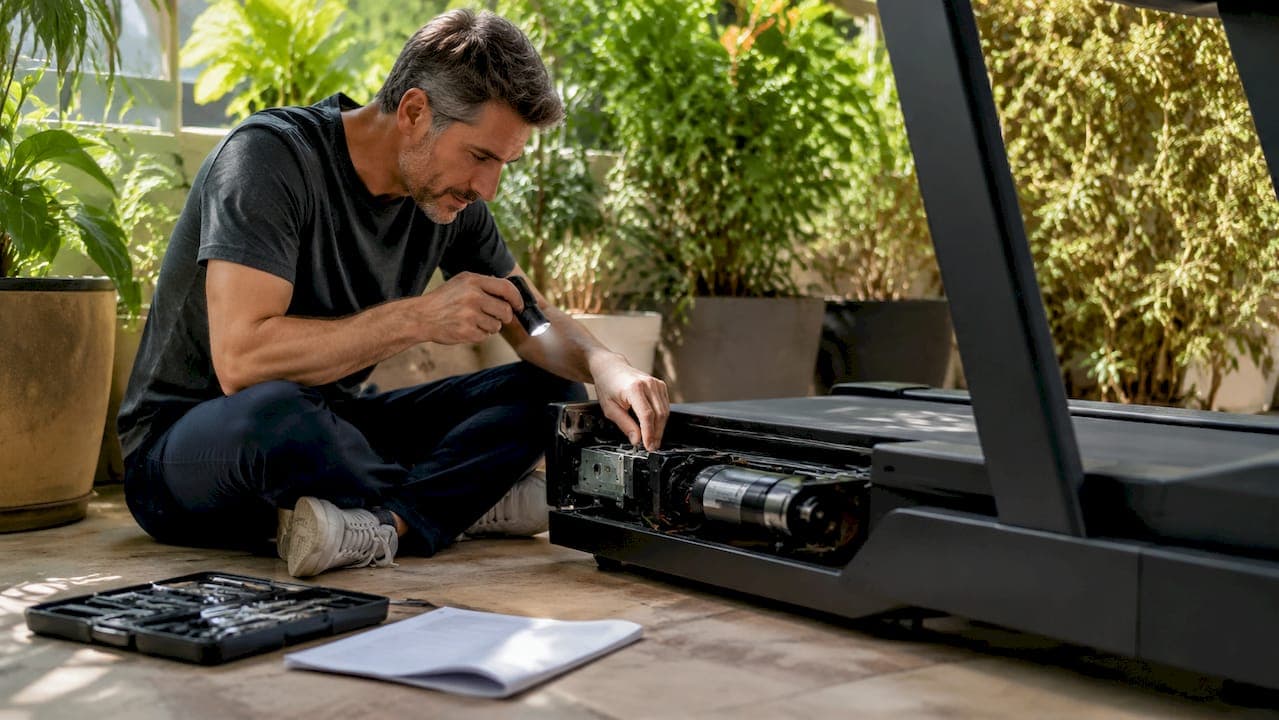
Treadmill motor failure is identified by five primary warning signs: unusual grinding or squealing noises, a burning smell from the motor area, overheating of the motor housing, abrupt mid-workout shutdowns, and inconsistent belt speed. These treadmill motor failure signs explained in detail below give you a clear diagnostic path before you spend money on parts or a replacement unit. Catching these symptoms early is the difference between a $150 repair and a $600 motor swap. The motor is the most expensive single component in any home treadmill, including popular models from NordicTrack, ProForm, and Horizon Fitness, so recognizing the warning signs fast protects your investment and your safety.
What are the most common physical and sensory signs of a failing treadmill motor?
Treadmill motor warning signs fall into four categories you can detect without any tools: sound, smell, heat, and performance. Each category points to a different stage of motor stress, and knowing which one you are dealing with narrows the repair path immediately.
Unusual noises are the earliest indicator most users notice. A grinding sound means metal components are contacting each other, often worn motor brushes dragging against the commutator. A high-pitched squealing points to bearing failure inside the motor housing. A low, rhythmic humming that gets louder under load suggests the motor is working harder than it should, usually because of increased friction from a dry or worn belt.
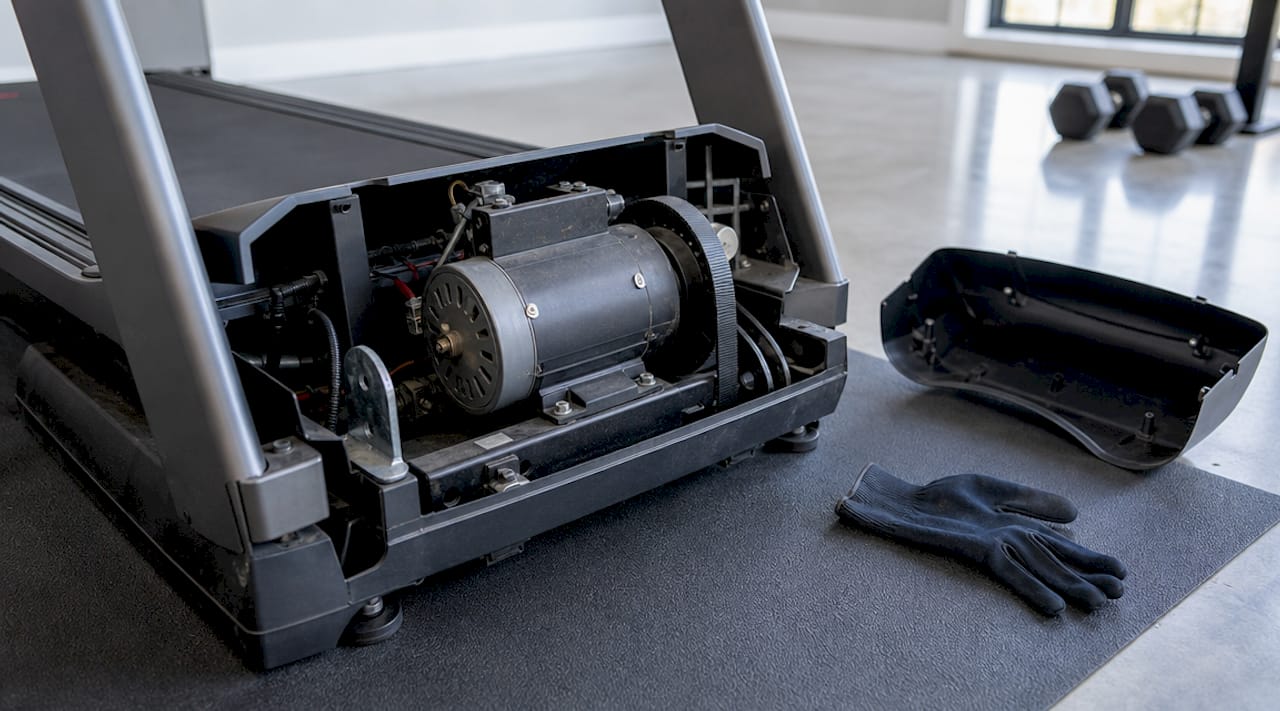
Burning smells are a more urgent signal. A burning odor from the motor is treated by technicians as an urgent triage signal. The smell is typically melting insulation on motor windings or softening rubber from the drive belt. Even if the treadmill is still moving, continued use after detecting this smell risks severe damage to the control board and motor windings. Unplug the machine immediately.
Overheating is the physical confirmation of what the smell already told you. Motor housing above 50°C indicates overheating likely caused by belt friction, and that level of heat can destroy motor windings within minutes of continued use. A quick touch test on the motor cover after a 20-minute session tells you a lot. Warm is normal. Hot enough to pull your hand away is not.
Inconsistent speed and abrupt stops are late-stage symptoms. The motor is no longer delivering steady torque, either because of winding damage, brush wear, or demagnetization from prior overheating. If your belt surges or hesitates at a fixed speed setting, the motor is struggling under load.
- Grinding or squealing during operation
- Burning plastic or rubber odor during or after use
- Motor cover hot to the touch after a short session
- Belt speed fluctuating without changing the console setting
- Treadmill shutting off mid-workout without an error code
Pro Tip: Place your hand near (not on) the motor cover vent after a 15-minute walk. If the air coming out feels like a hair dryer on high, you have a heat problem worth investigating before your next workout.
How do treadmill electrical issues and error codes reveal motor problems?
Error codes on the console are the treadmill's built-in diagnostic system, and they are frequently misread as proof of motor failure when the actual cause is a sensor or wiring issue. Understanding what each code actually measures saves you from replacing a working motor.
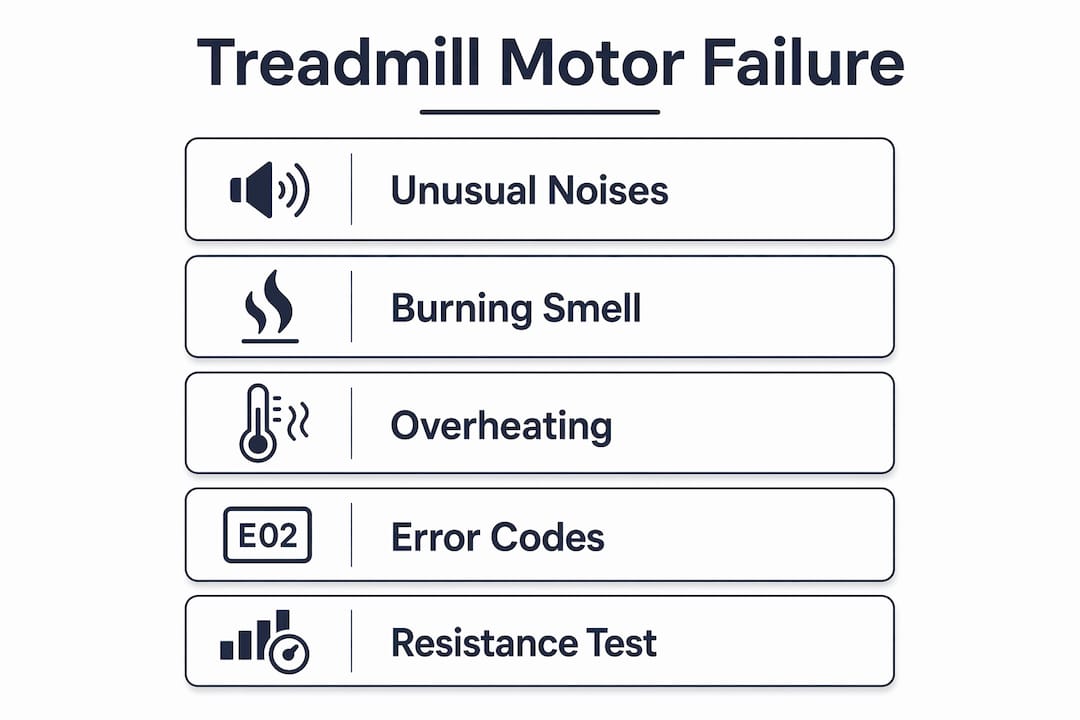
The E1 error code signals incorrect speed information reaching the console, most often caused by a speed sensor or magnet problem rather than motor failure itself. This distinction matters because a new speed sensor costs under $20, while a replacement motor runs $150 to $400 depending on the model. Electrical error codes require careful isolation. Not all signal errors indicate motor defects; some point to sensor or control board issues instead.
Follow this sequence before concluding the motor is at fault:
- Check the speed sensor connection. The sensor sits near the front roller and connects via a two-wire harness. A loose connector is the most common cause of E1 codes on Roger Black, Bremshey, and ProForm machines.
- Inspect the magnet alignment. The magnet attached to the front roller should sit 2 to 4mm from the sensor face. A gap outside that range produces false speed readings that trigger error codes.
- Look for physical sensor damage. Cracks, corrosion, or debris on the sensor face cause intermittent signal loss. Clean the sensor with a dry cloth before testing.
- Test the motor independently. If the sensor checks out, disconnect the motor leads and measure resistance. Resistance testing prevents unnecessary replacements by distinguishing motor faults from sensor or wiring issues.
- Assess the control board last. Burn marks, swollen capacitors, or a scorched smell on the board indicate electrical failure at the board level, not the motor.
Working through this sequence in order prevents the most expensive mistake in treadmill repair: replacing the motor when the actual fault is a $15 sensor or a loose wire.
What diagnostic tests confirm the actual condition of the motor?
Resistance measurement is the most reliable home diagnostic for confirming motor failure without sending the unit to a shop. The Horizon Fitness Elite T4000 service manual specifies that drive motor resistance above 10Ω signals a motor defect. A reading below 10Ω points toward sensors, wiring, or the control board as the root cause. This single test eliminates guesswork in most cases.
How to perform a basic resistance test
Unplug the treadmill completely. Locate the motor leads (typically two heavy-gauge wires running from the motor to the controller board) and disconnect them. Set a digital multimeter to the resistance (Ω) setting and touch the probes to the two motor terminals. A healthy motor reads between 1Ω and 5Ω on most home-grade units. A reading above 10Ω confirms internal winding damage.
Diagnosing demagnetization and torque loss
A motor that runs unloaded but fails under load usually implicates torque delivery issues rather than a power-on failure. This is the demagnetization pattern. The motor spins freely when you are not on the belt, but the moment you step on and add body weight, it slows dramatically or shuts down. Long overload or thermal damage causes the motor magnets to lose their field strength, producing unstable speed control that no amount of belt adjustment will fix.
| Test | What you observe | What it means |
|---|---|---|
| Resistance above 10Ω | Multimeter reads high on motor leads | Internal winding damage, motor needs replacement |
| Runs unloaded, fails under load | Belt slows or stops when you step on | Demagnetization or torque loss from overheating |
| Melted plastic debris near armature | Visible residue inside motor housing | Thermal damage confirms motor replacement needed |
| Resistance below 10Ω with error codes | Motor reads healthy but console shows E1 | Check speed sensor and magnet alignment first |
Pro Tip: Run the treadmill at 3 mph with no one on it, then step on carefully and watch the speed display. A drop of more than 0.5 mph that does not self-correct within two seconds is a reliable sign of torque loss.
How does belt condition and maintenance prevent motor failure?
Motor failure usually starts downstream of friction and load increases caused by dry or worn belts and lack of maintenance. The motor does not fail in isolation. It fails because it has been working too hard for too long, and the belt is almost always the reason.
A dry walking belt increases the friction load on the motor by forcing it to pull harder to maintain belt speed. That extra load generates heat. Heat damages motor windings. Proper lubrication and belt care directly reduce motor temperature and prevent the winding damage that leads to replacement. Most manufacturers, including NordicTrack and ProForm, recommend lubricating the belt every three months or every 150 miles of use, whichever comes first.
A worn belt compounds the problem. As the belt thins, it grips the deck unevenly, creating micro-surges in resistance that the motor compensates for hundreds of times per session. Over months, that constant compensation degrades the motor's internal components faster than any single overload event would.
- Lubricate the belt every three months with a silicone-based lubricant. Never use WD-40 or petroleum-based products.
- Check belt tension monthly. A belt that is too tight increases roller bearing load and motor strain. A belt that is too loose slips and causes speed inconsistency.
- Inspect the belt surface for fraying, cracking, or thinning at the edges. Replace a belt showing any of these signs before it damages the motor.
- Keep the area under the belt clean. Dust and debris act as an abrasive between the belt and deck, accelerating wear on both surfaces.
- Verify the deck surface is smooth. A rough or scored deck increases friction even with a new belt and fresh lubrication.
Addressing the treadmill overheating causes that stem from belt friction is the single highest-return maintenance task a treadmill owner can perform. A $10 bottle of silicone lubricant applied four times a year is a direct substitute for a $300 motor replacement.
Key takeaways
Catching treadmill motor failure signs early reduces repair costs significantly and prevents safety hazards caused by sudden shutdowns or electrical damage.
| Point | Details |
|---|---|
| Burning smell means stop now | Unplug immediately; continued use risks control board and winding damage. |
| E1 codes often mean sensor, not motor | Check speed sensor alignment and connection before ordering a replacement motor. |
| Resistance above 10Ω confirms motor fault | Use a multimeter on disconnected motor leads to confirm internal winding damage. |
| Load-condition testing reveals torque loss | A motor that slows under body weight but runs freely unloaded has demagnetized. |
| Belt lubrication prevents most motor failures | Silicone lubricant every three months reduces friction load and motor heat directly. |
What I've learned after years of diagnosing treadmill motors
The sign most users ignore longest is the burning smell. They notice it, they open a window, and they keep running. By the time they call for service, the motor windings are gone and the control board has absorbed enough heat stress to need replacement too. What started as a $150 motor job becomes a $450 repair because of two extra weeks of use.
The second most overlooked pattern is the load-condition failure. A treadmill that runs fine when you are standing next to it but bogs down the moment you step on it is not "just getting old." It is telling you exactly what is wrong. Thermal damage evidence such as melted plastic debris near the motor armature distinguishes electrical failures from mechanical belt friction problems. If you open the motor cover and see any discoloration or residue, the motor is done.
The mistake I see most often from users who try to self-diagnose is jumping straight to the motor without checking the speed sensor. A speed sensor misalignment of just a few millimeters produces every symptom of motor failure on the console. Spend five minutes checking the sensor before spending $300 on a motor.
My practical rule: if the treadmill smells like burning, treat it as an emergency. If it shows error codes, treat it as a sensor problem until the resistance test proves otherwise. That order of operations saves money and prevents the kind of compounding damage that turns a repairable machine into a replacement purchase.
— Steve
Get your treadmill diagnosed before a small problem becomes a motor replacement

Ignoring treadmill motor warning signs for even a few weeks can turn a straightforward repair into a full motor replacement, and in some cases, control board damage on top of that. Texastreadmillrepair sends certified technicians directly to your home or gym in South Texas, with same-week appointments and flat-rate pricing so you know the cost before any work begins. Every repair comes with a 90-day warranty on parts and labor. If you are unsure whether your machine is worth fixing, the repairable vs. unrepairable guide gives you a clear framework. For hands-on diagnosis and repair, visit Texastreadmillrepair's services page to book your appointment today.
FAQ
What are the first signs of treadmill motor failure?
The earliest signs are unusual noises (grinding or squealing), a burning smell during use, and inconsistent belt speed. A burning smell and abrupt shutdowns are common early indicators of overheating or friction issues.
Can I diagnose treadmill motor issues at home?
Yes. Disconnect the motor leads and use a digital multimeter to measure resistance. A reading above 10Ω confirms a motor defect, while a lower reading points to sensors or wiring as the likely cause.
What does the E1 error code mean on a treadmill?
The E1 code signals incorrect speed data reaching the console, most often from a misaligned speed sensor or magnet rather than motor failure. Check sensor alignment and connection before replacing any parts.
How does a dry belt cause motor failure?
A dry belt increases friction between the belt and deck, forcing the motor to work harder and generate more heat. Over time, that excess heat damages motor windings and leads to motor failure from friction and overload.
When should I call a professional for treadmill motor problems?
Call a technician immediately if you detect a burning smell, see melted plastic debris near the motor, or the treadmill shuts down under load. These signs indicate damage that worsens with continued use and requires professional inspection.