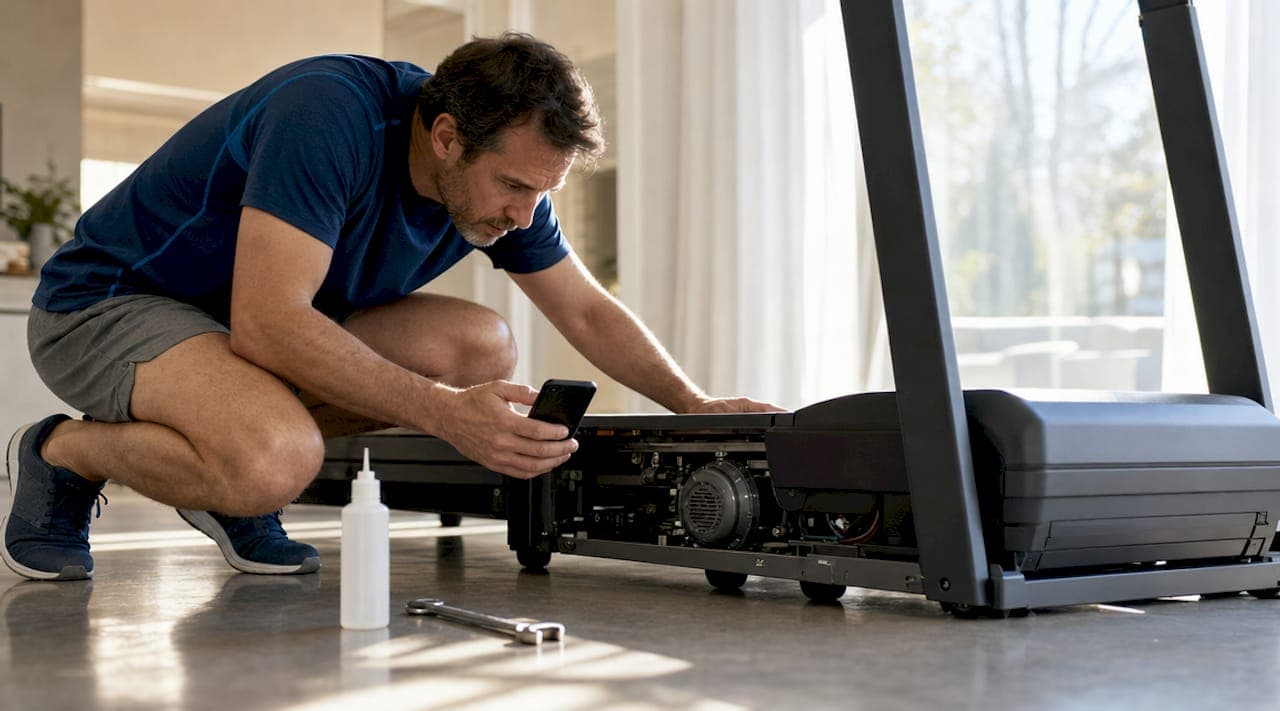
Treadmill noise types diagnosis is the process of identifying specific sounds your machine makes and tracing each one back to its mechanical or structural cause. A healthy home treadmill runs at 60 to 70 decibels, roughly the volume of a normal conversation. Anything louder or more irregular than that signals a problem worth investigating. NordicTrack, ProForm, and LifeFitness machines all share the same core noise categories: squeaking, grinding, rattling, thumping, and clicking. Catching these sounds early is the difference between a five-minute fix and a $400 repair bill.
1. Treadmill noise types diagnosis: the five sounds and what they mean
Every treadmill noise tells a specific story. The speed and pattern of a noise are more diagnostically useful than how loud it is. A sound that changes with belt speed points to the belt or rollers. A sound that stays constant regardless of speed points to the frame or loose hardware.
Here is a quick reference for the five most common sounds:
| Sound | Most likely cause | Urgency |
|---|---|---|
| Squeaking | Dry belt, worn deck, loose hardware | Low to medium |
| Grinding | Worn bearings, failing motor | High. Stop immediately |
| Rattling | Loose screws, plastic covers | Low |
| Thumping | Belt tension, uneven floor, running form | Low to medium |
| Clicking | Belt seam, debris under belt | Low |
Squeaking is the most common complaint. Lack of lubrication causes most squeaking and friction noise, and silicone-based lubricant resolves it in the majority of cases. If the squeak happens with the belt stationary, the source is loose frame hardware, not friction.
Grinding is the most serious sound on this list. Gear grinding from the motor signals failing bearings and demands an immediate stop. Continuing to run on a grinding treadmill accelerates damage to the motor, drive belt, and controller board.
Pro Tip: Record the noise on your phone while the treadmill runs at two different speeds. Play it back to a technician. This single step cuts diagnosis time in half.
2. Squeaking issues: belt, deck, and hardware causes
Squeaking is the noise most owners learn to ignore, which is exactly why it escalates. The recurring causes of treadmill squeaking break into three distinct categories: belt-to-deck friction, roller bearing wear, and loose frame connections.
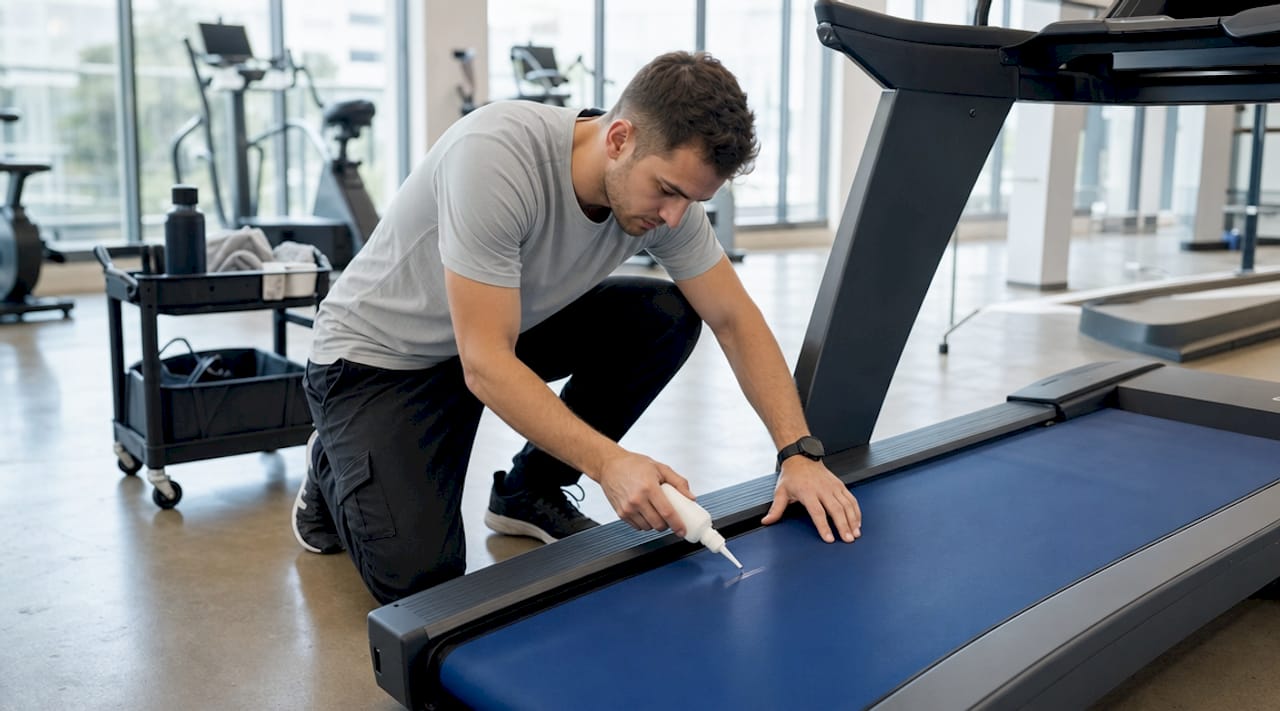
Belt-to-deck friction is the most fixable. The walking deck is a waxed or coated surface, and that coating wears down over time. When it does, the belt drags instead of glides. You will hear a rhythmic squeak that matches your footfall. Applying 100% silicone lubricant under the belt resolves this in most cases.
Roller bearing wear produces a higher-pitched squeak that increases with belt speed. This is distinct from friction noise because it does not go away after lubrication. Worn rollers cause grinding and rumbling, and the noise worsens as speed increases. Replacing the front or rear roller is a straightforward repair that most technicians complete in under an hour.
Squeaks with the belt stationary indicate loose frame hardware. Check the upright bolts, the console mounting screws, and the side rail connections. A quarter-turn tightening pass across all accessible hardware often eliminates this type of squeak entirely.
3. Grinding and motor noise diagnosis
Grinding is the noise that should make you stop the machine and unplug it. Electrical buzzing noise often indicates failing control boards or transformer issues, which create fire hazards if ignored. Grinding from the motor compartment is a separate but equally serious problem.
The motor area sits beneath the front hood of most treadmills. If the grinding comes from there, the likely culprits are the motor brushes, the drive belt connecting the motor to the front roller, or the front roller bearings themselves. None of these are safe to diagnose while the machine is powered on.
Worn rollers are diagnosed by watching the belt as it moves. Irregular belt movement, slight side-to-side drift, or a rumbling that increases with speed all point to roller failure. Replacing the rollers resolves the noise and prevents premature belt wear. This is a repair where professional help pays for itself, because an incorrectly installed roller misaligns the belt and creates new problems within weeks.
4. Rattling and clicking: the easier fixes
Rattling and clicking are the least alarming noise types, and they are usually the fastest to fix. Loose bolts, dust buildup, and dry belts increase treadmill noise significantly, but all three are preventable with basic periodic maintenance.
Rattling almost always comes from loose plastic covers, unsecured console panels, or bolts that have vibrated loose over time. Run your hand along the side rails and console housing while the machine is off. Any panel that flexes or shifts is a rattle source. Tighten the hardware underneath it and the rattle stops.
Clicking is typically caused by the belt seam passing over the deck or by a small piece of debris trapped under the belt. The click is rhythmic and matches belt rotation speed exactly. Turn off the machine, lift the belt edge, and inspect the deck surface for grit, hair, or small objects. Clean the deck with a dry cloth, then check the belt seam for any raised or fraying edges.
Pro Tip: Use a flashlight to inspect under the belt near the front and rear rollers. Debris accumulates in those zones and causes both clicking and premature belt wear.
5. Thumping and impact noise diagnosis
Thumping is the noise most often misdiagnosed as a mechanical fault. Impact noise relates more to running form and footwear than to mechanical problems in many cases. A heavy heel strike on a NordicTrack or ProForm treadmill sounds identical to a belt tension problem from the outside.
The way to separate user-caused thumping from mechanical thumping is to walk on the machine at a slow speed. If the thump disappears or reduces significantly at a walking pace, running form is the primary factor. If the thump persists at all speeds, the belt tension or floor surface is the cause.
Belt tension problems produce a rhythmic slap or thud as the belt sags and snaps back against the deck. Most treadmills have a rear roller adjustment bolt that increases belt tension. Turning it clockwise by a quarter turn on each side typically resolves this. Check the owner's manual for the correct tension specification before adjusting.
Treadmills can act like large drums on timber floors, amplifying vibrations throughout the structure even when the machine itself is quiet. Placing the treadmill on a high-density rubber mat absorbs impact and reduces noise transmission more effectively than carpet.
6. Home treadmill noise diagnosis steps: a systematic approach
Home treadmill noise diagnosis steps follow a logical sequence from simple to complex. Starting with the easiest checks first saves time and avoids unnecessary disassembly.
- Power cycle the machine. Turn it off, unplug it for 60 seconds, and restart. A 60-second power cycle eliminates electronic glitches that sometimes produce buzzing or inconsistent motor sounds.
- Check levelness. Place a level on the treadmill frame. An unlevel machine creates uneven belt wear and thumping. Adjust the leveling feet until the frame is flat.
- Inspect the belt visually. Look for fraying edges, cracks, or uneven wear patterns. A worn belt is a noise source and a safety risk.
- Check belt tension and alignment. The belt should deflect about half an inch when pressed in the center. It should also run centered on the deck with equal gaps on both sides.
- Lubricate the deck. Lift the belt edge and apply 100% silicone lubricant along the center of the deck. Never use WD-40 or petroleum-based products on a treadmill deck.
- Tighten all accessible hardware. Use the appropriate Allen wrench or socket to snug every bolt on the frame, uprights, and console.
- Test at multiple speeds. Run the belt at 2 mph, 5 mph, and 8 mph. Note whether the noise changes with speed. Speed-dependent noise points to belt and roller issues. Speed-independent noise points to frame or hardware.
Pro Tip: Kneel beside the machine at each speed and move your ear from the front roller area to the rear roller area. The location where the noise is loudest is the source.
7. Maintenance tips to prevent treadmill noise from returning
Prevention is cheaper than repair. Basic noises like squeaks and thuds are rarely signs of serious damage when caught early and maintained regularly. The following maintenance schedule keeps most treadmills quiet for years.
- Lubricate the deck every three months or every 40 hours of use, whichever comes first. Use only 100% silicone lubricant. Brands like 3-in-One Treadmill Belt Lubricant and Spot On Silicone are widely available and compatible with most machines.
- Tighten all hardware monthly. Vibration loosens bolts faster than most owners expect. A five-minute tightening pass prevents rattling and frame stress.
- Clean under the belt quarterly. Dust and debris accumulate on the deck and under the motor hood. Use a dry cloth for the deck and a vacuum with a brush attachment for the motor area.
- Inspect the belt for wear every six months. Look for thinning, cracking, or fraying. A treadmill deck replacement is worth considering when the belt shows significant wear on both surfaces.
- Use a treadmill mat. Place a dense rubber mat under the machine to reduce vibration transfer to the floor and protect both the treadmill and the surface beneath it.
- Check your footwear. Worn running shoes with compressed midsoles increase impact force and thumping noise. Replace shoes every 300 to 500 miles of use.
8. When to stop DIYing and call a professional
Some treadmill noises are beyond what a wrench and a bottle of silicone can fix. Knowing when to stop is as important as knowing how to start. The following signs indicate that professional repair is the right call.
- Grinding from the motor compartment that does not stop after power cycling. This points to bearing failure or motor brush wear.
- Electrical buzzing or burning smell. These are fire hazards. Unplug the machine immediately and do not use it until a technician inspects the control board and wiring.
- Persistent noise after lubrication, tightening, and belt adjustment. If the noise survives all three fixes, a component is worn beyond maintenance.
- Belt that slips under load. A slipping belt combined with noise indicates roller wear or a stretched belt that needs replacement.
- Noise that worsens over days or weeks. Progressive worsening means a part is actively failing. Waiting increases repair cost and safety risk.
Review the repairable vs unrepairable signs for your specific machine before deciding whether to repair or replace. Some older treadmills reach a point where the cost of parts exceeds the value of the machine.
Key takeaways
Accurate treadmill noise diagnosis requires matching the sound type, timing, and speed pattern to a specific mechanical cause before attempting any repair.
| Point | Details |
|---|---|
| Match sound to source | Grinding signals bearings or motor; squeaking signals dry belt or loose hardware. |
| Use speed as a diagnostic tool | Noise that changes with belt speed points to belt and roller issues, not the frame. |
| Lubricate on a schedule | Apply silicone lubricant every three months to prevent most friction-based noises. |
| Stop for grinding and buzzing | Motor grinding and electrical buzzing require immediate shutdown and professional inspection. |
| Prevention beats repair | Monthly hardware checks and quarterly cleaning eliminate most common treadmill noises before they start. |
What years of noise calls taught me
I have diagnosed treadmill noise in hundreds of homes and gyms across South Texas, and the pattern is almost always the same. The owner heard the noise weeks before calling. They assumed it would go away. It did not.
The most common mistake I see is treating all treadmill noise as a lubrication problem. Silicone lubricant is the right fix for belt-to-deck friction, but it does nothing for a worn roller bearing or a loose console panel. Applying lubricant to a grinding machine is like putting air freshener in a car with a failing transmission. It masks the symptom and delays the diagnosis.
The second mistake is ignoring the pattern. A click that happens exactly once per belt revolution is a belt seam issue. A squeak that only occurs at speeds above 6 mph is a roller bearing issue. A thud that disappears when you walk instead of run is a form and footwear issue. The pattern is the diagnosis. Volume is just the alarm.
My honest recommendation: spend five minutes every month listening to your treadmill at different speeds. You will know its normal sound better than anyone. When something changes, you will catch it early, when the fix is still simple and cheap.
— Steve
Keep your treadmill running quietly with expert help
When the noise persists after you have worked through every diagnosis step, the problem is mechanical and the fix requires a trained technician.

Texastreadmillrepair sends certified technicians directly to your home or gym in South Texas, with same-week appointments and flat-rate pricing that eliminates surprise fees. Every repair includes a 90-day warranty on parts and labor. Whether you are dealing with a grinding motor, a slipping belt, or a noise you cannot identify, the team at Texastreadmillrepair diagnoses it fast and fixes it right. Check the treadmill repair services page to schedule your appointment, or review the owner's repair guide to understand exactly what your machine needs before the technician arrives.
FAQ
What causes treadmill squeaking noise?
Squeaking is caused by belt-to-deck friction from insufficient lubrication, worn roller bearings, or loose frame hardware. Applying 100% silicone lubricant under the belt resolves friction-based squeaking in most cases.
How do I know if my treadmill noise is serious?
Grinding from the motor area and electrical buzzing are the two noises that require immediate shutdown. All other sounds, including squeaking, rattling, and clicking, can typically be diagnosed and fixed through standard home maintenance steps.
Why does treadmill noise increase at higher speeds?
Noise that worsens with speed points to belt or roller issues, because those components rotate faster as speed increases. Speed-independent noise that stays constant at all settings points to loose hardware or frame vibration instead.
Can running form cause treadmill noise?
Yes. Heavy heel striking produces a thumping sound that is often mistaken for a belt tension problem. Testing the machine at a slow walking pace separates form-related impact noise from mechanical noise.
How often should I lubricate my treadmill to prevent noise?
Lubricate the deck with silicone lubricant every three months or every 40 hours of use. Regular lubrication prevents the majority of friction-based squeaking and extends belt and deck life significantly.