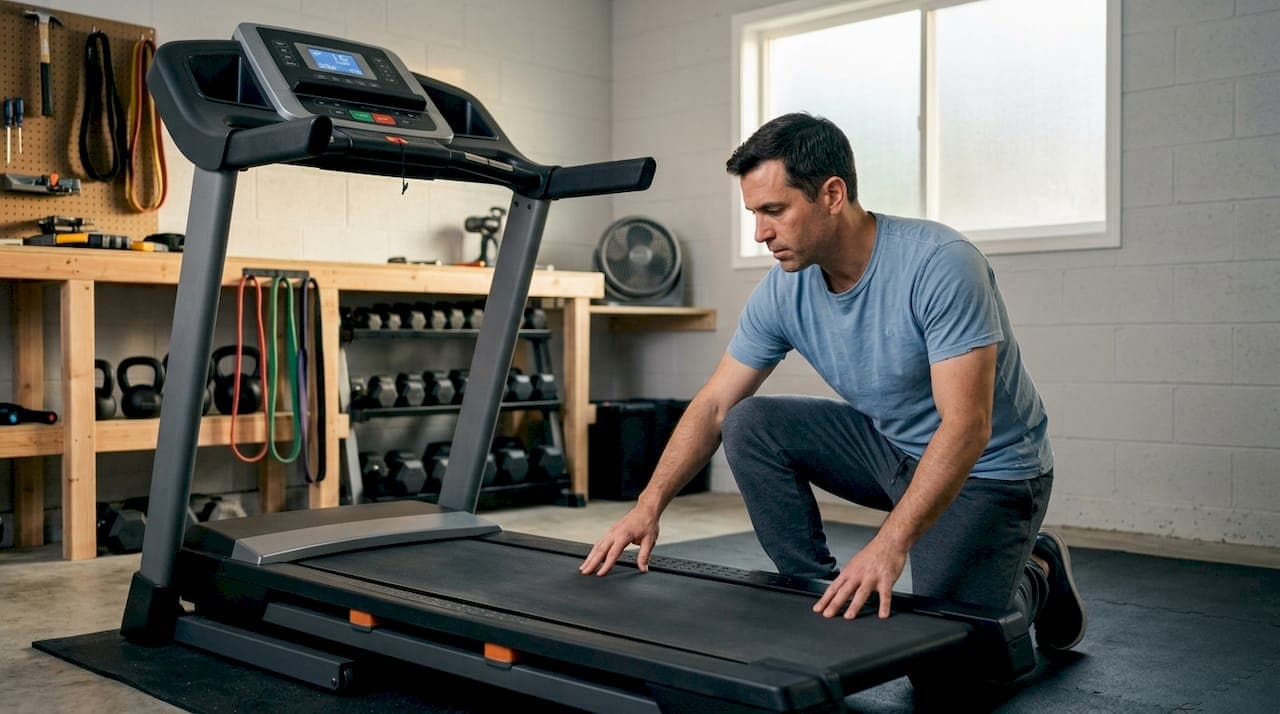
Your treadmill shuts off mid-run with no warning. You smell something burning. The motor housing feels hot to the touch. These are classic signs of treadmill overheating, and they happen more often than most people realize. Working through a complete treadmill overheating reasons list is the fastest way to pinpoint what is actually wrong with your machine. Some causes are simple maintenance fixes you can handle in 20 minutes. Others need a certified technician before you cause real damage. This guide covers every major cause, with practical steps to address each one.
Table of Contents
- Key takeaways
- 1. Lack of belt lubrication
- 2. Over-lubrication
- 3. Worn or damaged belt and deck
- 4. Incorrect belt tension
- 5. Motor overload from excessive weight or speed
- 6. Worn motor brushes or failing motor components
- 7. Dust and debris blocking motor vents
- 8. Poor ventilation and placement
- 9. Electrical wiring problems
- 10. Power surges and improper power supply
- 11. Control board malfunctions
- 12. Exceeding continuous use limits
- My honest take on treadmill overheating
- Get your treadmill running right again
- FAQ
Key takeaways
| Point | Details |
|---|---|
| Friction is the top cause | Lack of lubrication, worn belts, and tight tension generate the most heat in everyday use. |
| Motor overload is serious | Exceeding weight limits or running too long forces the motor to work harder and overheat. |
| Dust blocks airflow fast | Pet hair and debris trapped in vents act as insulation, cutting off the motor's cooling. |
| Electrical faults need experts | Loose wiring and control board failures require professional diagnosis, not guesswork. |
| Maintenance prevents most issues | A simple schedule of lubrication, cleaning, and belt checks stops most overheating before it starts. |
1. Lack of belt lubrication
Friction between belt and deck is the single most common cause of treadmill overheating. When the belt runs dry, it drags against the deck surface with every stride, generating heat that builds up faster than the machine can dissipate it.
Most manufacturers recommend applying silicone lubricant every 2 to 3 months, or roughly every 40 to 60 hours of use. Skipping this schedule even once or twice can leave the deck surface dry enough to trigger the thermal protection system and shut your machine down.
Pro Tip: Always use 100% silicone lubricant, never WD-40 or general-purpose oils. Non-silicone products degrade belt material and leave residue that worsens friction over time.
2. Over-lubrication
Here is the counterintuitive one that trips up a lot of treadmill owners. Applying too much lubricant causes the belt to slip on the deck. When the belt slips, the motor has to work harder to maintain speed, which raises motor temperature and creates the exact overheating problem you were trying to prevent.
A thin, even coat applied under the center of the belt is all you need. If you lift the belt edge and the deck feels slick or sticky, you have already applied too much. Wipe off the excess with a clean cloth before running the machine.
3. Worn or damaged belt and deck
Even with perfect lubrication habits, belts and decks wear out. A belt that has thinned, cracked, or developed a rough texture creates more friction against the deck regardless of how much lubricant you apply. The same goes for a deck with worn wax coating or visible grooves.
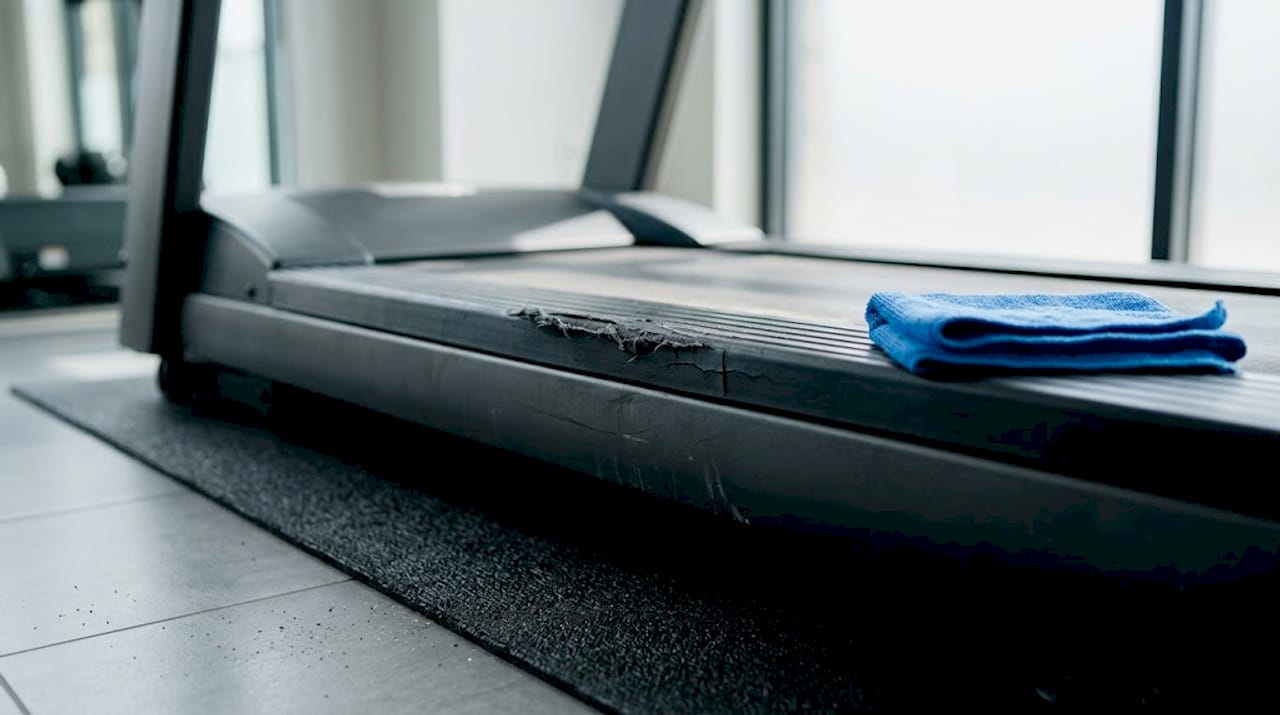
Most treadmill decks are reversible, which gives you a second life out of the surface before replacement. If your belt shows visible cracking, fraying at the edges, or uneven thickness, replacement is overdue. Running a worn belt is one of the faster ways to burn out a motor.
4. Incorrect belt tension
Belt tension is one of the most underrated factors on any treadmill overheating reasons list. A belt that is too tight creates constant pressure against the motor and rollers, generating significant frictional heat even when the machine looks and sounds fine. Technicians treat belt tension as a primary heat-control adjustment, not just a performance tweak.
A belt that is too loose is also a problem. It slips under load, forces the motor to compensate, and produces the same motor strain as over-lubrication. The right tension allows about two to three inches of lift at the center edge of the belt, with no slipping when you push down firmly.
5. Motor overload from excessive weight or speed
Every treadmill motor has a rated capacity. When user weight exceeds the machine's stated limit, or when someone runs at high speeds for extended periods, the motor draws more current than it was designed to handle. Heavy use at high speeds is a direct path to motor overheating, especially on entry-level home machines with smaller motors.
This is especially relevant for home treadmill motor overheating. Consumer-grade machines rated for 250 to 300 pounds are not built for the same sustained duty cycle as commercial gym equipment. If your machine's motor is undersized for your weight or workout intensity, you will see repeated thermal shutdowns regardless of how well you maintain it.
6. Worn motor brushes or failing motor components
Inside the motor, carbon brushes transfer electrical current to the rotating armature. As these brushes wear down, they create increased resistance and uneven contact, both of which generate heat. A motor with worn brushes runs hotter than normal even under light loads.
Signs of motor trouble include:
- An unusual grinding or buzzing sound from the motor housing
- A burning smell that lingers after shutdown
- The motor housing feeling hot to the touch within minutes of starting
- Repeated thermal shutdowns even after cooling and cleaning
These symptoms point to internal motor issues that go beyond what routine maintenance can fix. A professional inspection is the right call here, not continued trial and error.
7. Dust and debris blocking motor vents
Dust and pet hair trapped in motor vents act as insulation around the motor, cutting off the airflow the machine depends on to stay cool. This is one of the most common causes of treadmill heat issues in homes with pets or carpeted floors.
The fix is straightforward. Remove the motor cover and use a vacuum with a brush attachment to clear out all accumulated debris. Do this every three to six months, or more often if you have pets. After cleaning, let the machine cool for at least 30 minutes before restarting it in a well-ventilated space.
Pro Tip: After any overheating shutdown, unplug the treadmill and wait a full 30 minutes before attempting to restart it. Running the motor again while it is still hot accelerates wear on internal components.
8. Poor ventilation and placement
Where you put your treadmill matters more than most people think. Placing it against a wall with less than two feet of clearance on the sides and rear restricts airflow around the motor. Putting it near a heat vent, in a garage without climate control, or in a room that regularly exceeds 80°F compounds the problem significantly.
Treadmills shut off to prevent damage when ambient heat combines with internal heat generation to push temperatures past the safety threshold. Moving your machine to a cooler, more open space is sometimes all it takes to stop repeated shutdowns.
9. Electrical wiring problems
Loose or damaged wiring inside the treadmill creates resistance at connection points. Resistance generates heat, and that heat can affect nearby components including the control board and motor controller. This is a less obvious entry on the causes of treadmill overheating, but it is more common in older machines that have been moved or reassembled multiple times.
Visible signs include inconsistent speed, flickering console displays, or a burning smell that does not come from the motor area. Wiring issues require a technician. Poking around live electrical components without training creates a real safety risk.
10. Power surges and improper power supply
Voltage spikes from your home's electrical system can damage the treadmill's control board and motor controller, causing them to run inefficiently and generate excess heat. Power surges cause overheating by degrading the electronics that regulate motor speed and load.
The fix is a quality surge suppressor rated to UL 1449 or TVSS standards. Plugging your treadmill into a standard power strip is not adequate protection. A dedicated circuit with proper surge protection is the right setup for any machine you rely on regularly.
11. Control board malfunctions
The control board regulates power delivery to the motor. When it malfunctions, it can send inconsistent or excessive power to the drive system, causing the motor to run hotter than normal. Control board failures often show up as erratic speed changes, console errors, or shutdowns that happen even after the machine has been cleaned and cooled.
This is one of the trickier causes to diagnose because the symptoms overlap with motor and electrical issues. A certified technician can test the board directly and confirm whether replacement is needed.
12. Exceeding continuous use limits
Most treadmill manufacturers set a maximum continuous use limit of one hour per session. Running beyond that without a rest period keeps the motor at operating temperature without any recovery time, which accelerates heat buildup and component wear.
This matters most for home users doing back-to-back workout sessions or households where multiple people use the machine in sequence. Giving the motor 15 to 20 minutes between sessions is a simple habit that meaningfully extends the life of the machine.
Summary: causes by category
| Category | Common causes | Quick fix |
|---|---|---|
| Friction | Dry belt, worn deck, tight tension | Lubricate, adjust tension, replace worn parts |
| Motor strain | Overload, worn brushes, extended use | Stay within weight limits, rest between sessions |
| Electrical | Loose wiring, power surges, board failure | Surge protector, professional inspection |
| Ventilation | Dust, poor placement, heat sources | Clean vents, reposition machine |
My honest take on treadmill overheating
I have seen hundreds of treadmills come through for service, and the pattern is almost always the same. The machine overheats because two or three small maintenance tasks were skipped for six months or more. Nobody ignored the problem on purpose. Life gets busy, and a treadmill that is running feels like a treadmill that is fine.
What I find most often is a combination of a dry belt and a motor compartment packed with dust. Either one alone might not trigger a shutdown. Together, they push the motor past its limit within 20 minutes of starting. The fix takes less than an hour and costs almost nothing in parts.
Belt tension is the one I see overlooked the most. People lubricate on schedule and clean the vents, but nobody checks tension until the belt starts slipping visibly. By that point, the motor has already been running hot for months. Adjusting tension is a two-minute job with a hex wrench, and it makes a bigger difference than most people expect.
My strong advice: do not wait for a shutdown to start paying attention to your machine. A 30-minute maintenance check every three months prevents treadmill overheating far better than any repair after the fact. And when you do smell burning or hear unusual motor noise, stop the machine immediately. Running it through those symptoms is how a $200 repair becomes a $600 one.
— Myles
Get your treadmill running right again
If you have worked through this list and your treadmill is still shutting down from heat, the problem is likely inside the motor or control board. That is not a DIY situation.

Texastreadmillrepair sends certified technicians directly to your home or gym across South Texas, with same-week appointments and flat-rate pricing so you know the cost upfront. No guessing, no hauling your machine anywhere. Whether you are in McAllen, Corpus Christi, Laredo, or anywhere in between, expert help is close. Check out the full range of treadmill repair services and book a diagnosis before a fixable problem turns into a full replacement.
FAQ
Why does my treadmill keep shutting off from heat?
Your treadmill shuts off automatically when internal temperature exceeds a safe threshold. The most common triggers are a dry belt, clogged motor vents, or a motor working beyond its rated load.
How often should I lubricate my treadmill belt?
Apply silicone lubricant every 2 to 3 months or every 40 to 60 hours of use. Skipping lubrication is the leading cause of belt and deck friction that leads to overheating.
Can dust really cause a treadmill to overheat?
Yes. Dust and pet hair packed into the motor vents block airflow and trap heat around the motor. Vacuuming the motor compartment every few months resolves this issue in most cases.
What is the maximum time I should run my treadmill continuously?
Most manufacturers recommend no more than one hour of continuous use per session. Allowing 15 to 20 minutes of rest between sessions prevents heat from accumulating in the motor.
When should I call a technician for treadmill overheating?
Call a technician if you notice a burning smell, unusual motor noise, or repeated shutdowns after cleaning and cooling. These symptoms point to motor brush wear, wiring faults, or control board failure that require professional diagnosis.