
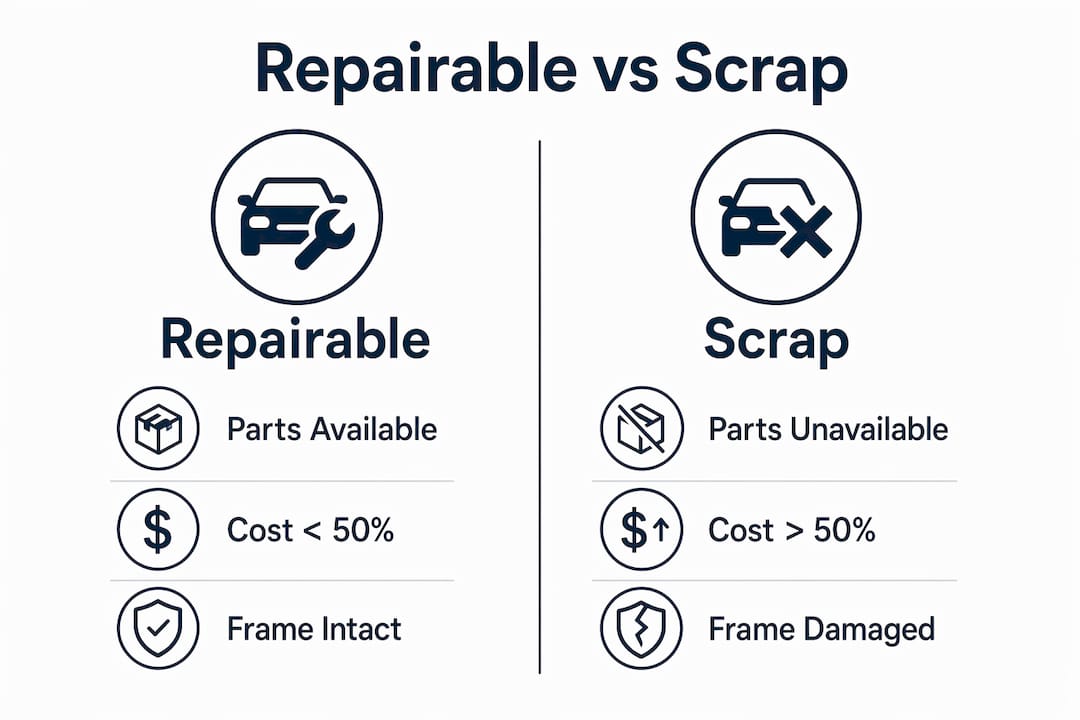
A treadmill is repairable when critical parts are available, repair costs stay below the replacement threshold, and the frame remains structurally sound. Understanding what makes treadmill repairable versus scrap saves you from spending $400 on a machine worth $200 or, worse, throwing out a treadmill that needed a $60 belt. The decision comes down to three factors: component availability, cost comparison, and physical condition. Texastreadmillrepair sees this exact scenario weekly across South Texas, and the answer is almost never obvious at first glance.
What makes treadmill repairable versus scrap?
Repairability is defined by whether the right parts exist, whether the repair cost is reasonable, and whether the machine's frame can safely support continued use. A treadmill with a cracked frame or discontinued electronics fails all three tests. One with a worn belt and a working motor passes all three.
The most commonly repairable components fall into two categories: mechanical wear parts and modular electronics.
Mechanical wear parts include:
- Walking belts: belt replacement costs $150–$300 including parts and labor, making them almost always worth fixing.
- Rollers and bearings: standard aftermarket parts fit most major brands.
- Drive belts: cheap to source and quick to swap, restoring smooth operation fast.
- Speed sensors: small, inexpensive, and widely available.
Modular electronics include:
- Motor control boards: replaceable on most machines built after 2010.
- Console displays: universal replacement kits cover many common models.
- Safety key switches and reed sensors: low cost, high availability.
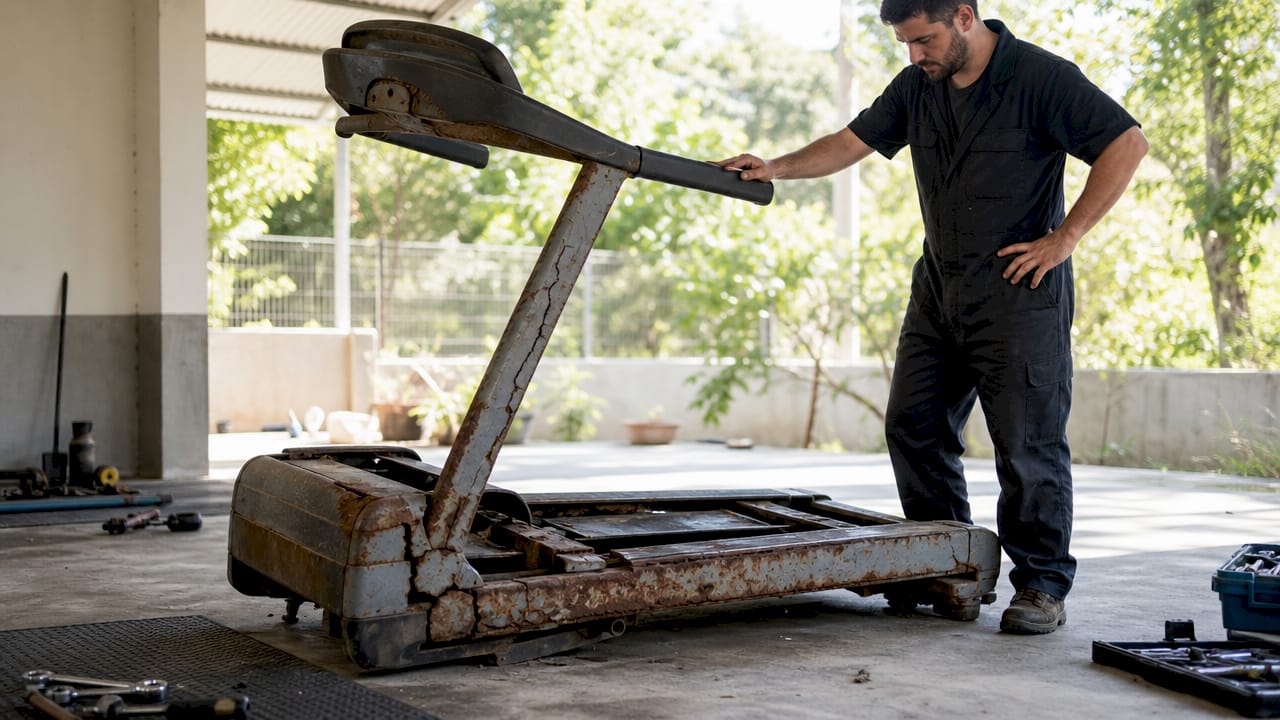
The components that push a treadmill toward scrap status are different. A cracked or severely rusted frame cannot be safely welded back to spec. A motor controller for a discontinued model from a brand that folded five years ago simply does not exist anymore. Proprietary consoles with no aftermarket support leave you with a dead screen and no fix.
Pro Tip: Before ordering any part, search the model number plus "replacement parts" on at least two supplier sites. If you get zero results on both, that machine is likely heading toward scrap regardless of what else works.
How do you evaluate treadmill condition at home?
Diagnosing a treadmill accurately before calling a technician saves time and prevents premature scrapping. Many owners assume the worst when the real problem is minor. Follow these steps to assess your machine's actual condition.
-
Check the belt and deck. Lift the belt edge and run your hand along the underside. A smooth, slightly waxy surface is fine. A rough, fraying, or glazed surface means the belt needs replacement. A deeply grooved or delaminated deck needs replacement too, but that is still a repairable condition in most cases.
-
Listen to the motor. Run the treadmill at a slow speed with no one on it. A healthy motor hums steadily. Grinding, squealing, or a burning smell signals motor stress. Overheating motors often result from belt tension problems, not motor failure itself.
-
Test the wiring before assuming electronics failed. Many apparent failures are actually corroded contacts or loose wiring that mimic complete electronic failure. A basic multimeter test of the power circuit takes five minutes and can save you from scrapping a working machine.
-
Check belt tension carefully. Over-tightening the belt increases friction, burns out motors, and damages bearings. A slipping belt more often signals lubrication failure than excessive looseness. Adjust tension only after lubricating the deck.
-
Look for rust and frame damage. Inspect the welds, uprights, and base frame. Surface rust on cosmetic parts is irrelevant. Rust at structural welds or stress points is a safety issue that no repair fixes.
Pro Tip: If you cannot diagnose the problem in person, a virtual diagnostic session can resolve common issues like belt slipping and console calibration without an in-home visit. Remote sessions typically run about one hour and cost around $99, which is far cheaper than a misdiagnosed repair.
Owners consistently overestimate damage severity. A treadmill that stops mid-run and throws an error code feels catastrophic. Most of the time, it is a tripped thermal cutoff or a loose speed sensor wire. Knowing how to evaluate treadmill condition accurately is the skill that separates a $60 fix from a $600 mistake.
When do repair costs make financial sense?
The standard industry benchmark is the 50% rule: if repair costs exceed 50% of the machine's current replacement value, replacement is the better financial decision. That rule works well for home treadmills but breaks down for commercial machines.
| Repair Type | Typical Cost | Recommended Action |
|---|---|---|
| Walking belt replacement | $150–$300 | Repair: almost always worthwhile |
| Speed sensor or drive belt | Under $100 | Repair: no question |
| Motor replacement (home unit) | $300–$600 | Evaluate: compare to machine's resale value |
| Motor rebuild (commercial unit) | Up to $800 | Repair: cost-effective vs $5,000–$10,000 replacement |
| Control board (proprietary, discontinued) | Not available | Scrap: no parts, no fix |
Home treadmills priced under $800 new hit the scrap threshold quickly. A $350 motor replacement on a $500 machine is a losing bet. The same $350 repair on a $1,500 machine is straightforward math in favor of repair.
Commercial treadmills flip the equation entirely. An $800 motor rebuild on a commercial unit is highly cost-effective compared to a $5,000–$10,000 replacement. Commercial machines are also built with modular components and longer parts support windows, which makes repair more viable across the board.
Proprietary parts are the hidden cost trap. Discontinued product lines lose parts availability within 18–24 months of discontinuation. A treadmill that looks repairable on the surface becomes scrap the moment you discover the control board is no longer manufactured. Always verify parts availability before committing to any electrical repair. Texastreadmillrepair technicians check parts sourcing before quoting any job, which prevents owners from sinking money into a dead end.
For home gym owners specifically, understanding motor replacement costs and how they compare to machine value is the clearest path to a sound financial decision.
What are the signs a treadmill should be scrapped?
Some treadmills are beyond repair regardless of cost. Recognizing these signs early prevents wasted money and, more critically, prevents injury from an unsafe machine.
- Structural rust at welds or the base frame. Frame cracks and structural rust are safety hazards that require machine retirement. Surface rust on the handrails is cosmetic. Rust eating through a weld is a structural failure.
- Frame cracks or bent uprights. No weld repair restores the original load-bearing capacity of a treadmill frame. A cracked frame is a liability, not a repair candidate.
- Discontinued parts with no aftermarket alternative. Machines with critical proprietary parts no longer in production are effectively scrap, regardless of purchase price or apparent condition. This applies especially to older budget brands that exited the market.
- Repeated electrical failures across multiple components. One failed control board is a repair. Two failed boards plus a burned motor plus a dead console is a systemic wiring problem. Systemic electrical failure rarely has a single fix.
- Repair cost exceeds replacement value. When the quote for parts and labor crosses 50% of what a comparable machine costs new, replacement wins on every financial measure.
- Belt deck delamination beyond repair. A deck that has separated, warped, or cracked through its core cannot be resurfaced. Replacement is the only option, and on older machines, decks are often no longer available.
The owner's guide to repairable vs unrepairable signs from Texastreadmillrepair walks through each of these criteria in detail, with photos and model-specific examples.
Key Takeaways
A treadmill is repairable when parts are available, repair costs stay below 50% of replacement value, and the frame is structurally intact. Scrap it when any one of those three conditions fails.
| Point | Details |
|---|---|
| Parts availability is the first test | Verify parts exist for your model before spending anything on diagnosis or labor. |
| Use the 50% rule | If repair costs exceed half the machine's replacement price, buy new instead. |
| Commercial machines justify bigger repairs | An $800 motor rebuild beats a $5,000–$10,000 replacement on commercial units. |
| Most electronic failures are minor | Corroded contacts and loose wiring mimic total failure; test with a multimeter first. |
| Structural damage means scrap | Frame cracks and weld rust cannot be safely repaired and require machine retirement. |
What I've learned from years of treadmill repair calls
Owners almost always overestimate how broken their treadmill is. The most common call I get starts with "I think the motor is dead." Nine times out of ten, the motor is fine. The belt is over-tightened, the deck is dry, and the thermal cutoff tripped to protect the motor from overheating. Ten minutes of lubrication and tension adjustment, and the machine runs perfectly.
The second most common mistake is skipping parts research before committing to a repair. I have seen owners pay a technician $200 for a diagnostic visit only to discover the control board for their model has been out of production for three years. That $200 is gone, and the machine still goes to the curb. Check parts availability first. It takes 10 minutes online and saves real money.
Routine maintenance is the most underrated factor in this whole equation. A treadmill that gets its belt lubricated every three months and its tension checked twice a year rarely needs major repairs. The machines I see that are genuinely beyond repair almost always have zero maintenance history. Neglect turns a repairable machine into scrap faster than any single failure.
Remote diagnostics have changed how I approach initial assessments. A short video call where the owner runs the machine and I listen to the motor, watch the belt tracking, and check the console response tells me 80% of what I need to know before anyone drives anywhere. If you are on the fence about whether to repair or scrap, a remote session is the lowest-cost first step you can take.
— Steve
Texastreadmillrepair can help you decide
Figuring out whether your treadmill is worth fixing or ready for the curb is easier with a certified technician in your corner. Texastreadmillrepair offers same-week appointments across South Texas, with flat-rate pricing and a 90-day warranty on all parts and labor.

Start with the owner's repair guide to check your machine against the key criteria before spending a dollar. If you need a hands-on assessment, Texastreadmillrepair's certified technicians come directly to your home or gym, diagnose the issue fast, and give you a clear repair-versus-replace recommendation with no surprise fees. Visit Texas Treadmill Repair services to book your appointment or ask about a virtual diagnostic session.
FAQ
What is the 50% rule for treadmill repair?
The 50% rule states that if repair costs exceed 50% of the machine's current replacement value, replacement is the better financial choice. This benchmark applies most clearly to home treadmills.
Can a treadmill with a dead console be repaired?
A dead console is repairable if replacement parts are available for that model. If the console is proprietary and the manufacturer has discontinued it, the machine is effectively scrap.
How do I know if my treadmill motor is actually broken?
Test the power circuit with a multimeter before assuming motor failure. Many apparent motor failures are actually corroded contacts or loose wiring that cut power to a working motor.
Is it worth repairing a treadmill belt?
Yes. Walking belt replacement costs $150–$300 including parts and labor and is almost always the right call, since a worn belt is the most common cause of motor stress and console errors.
When should I scrap a treadmill instead of repairing it?
Scrap a treadmill when the frame is cracked or structurally rusted, critical parts are no longer manufactured, or repair costs exceed 50% of what a comparable new machine costs. Repeated electrical failures across multiple components also signal it is time to replace.