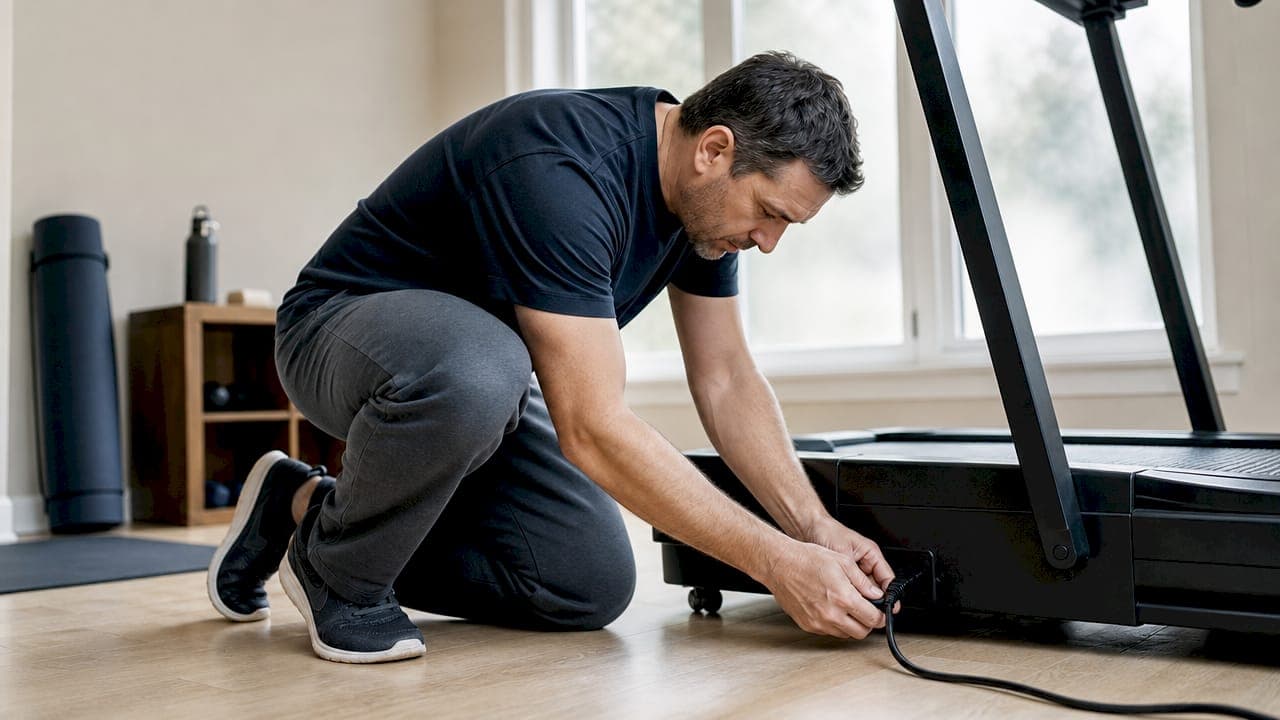
Treadmill won't turn on diagnosis means tracing the full power path from your wall outlet through the safety key, power switch, and internal electronics to find the exact failure point. Most owners skip steps and replace expensive parts when the real fix costs nothing. The components most often responsible are the wall outlet, GFCI breaker, safety key, power switch, internal fuse, and motor control board. A multimeter and a basic understanding of how electricity flows through your machine are the only tools you need to start. This guide walks you through every checkpoint in order, so you fix the right thing the first time.
How to verify your outlet and external power supply first
External power problems cause a large share of treadmill not powering on cases, and they take less than five minutes to rule out. Plug a lamp or phone charger into the same outlet. If that device works, the outlet is fine. If it does not, reset the circuit breaker in your home electrical panel before touching the treadmill at all.
GFCI outlets and surge protectors are a hidden trap for treadmill owners. Treadmill motors generate electrical noise and small leakage currents that falsely trip GFCI protection, making the machine look dead when the outlet is actually the problem. This is one of the most common treadmill issues that gets misdiagnosed as an internal fault.
Check the power cord next. Visible cord damage from crushing under the machine or fraying near the plug is a frequent and easily fixable cause of no power. Run your hand along the full length of the cord and look for kinks, cuts, or melted insulation. A damaged cord is a fire risk and must be replaced before any further testing.
- Plug a working device into the same outlet to confirm power delivery.
- Press the reset button on any GFCI outlet near the treadmill.
- Check your home circuit breaker panel for a tripped breaker labeled "treadmill" or the room it is in.
- Inspect the full length of the power cord for visible damage.
- Move the treadmill plug to a different outlet if the cord checks out.
Pro Tip: Plug your treadmill directly into a dedicated wall outlet, not a surge protector or power strip. Treadmill motors draw high startup current that trips most surge protectors and causes repeat false shutdowns.
Safety key and power switch: the most common no-start triggers
A missing or improperly seated safety key is the top cause of treadmill startup failure. The safety key completes a magnetic or mechanical circuit that tells the console the machine is safe to run. Without it, the treadmill will not respond to any button press, no matter how many times you try.
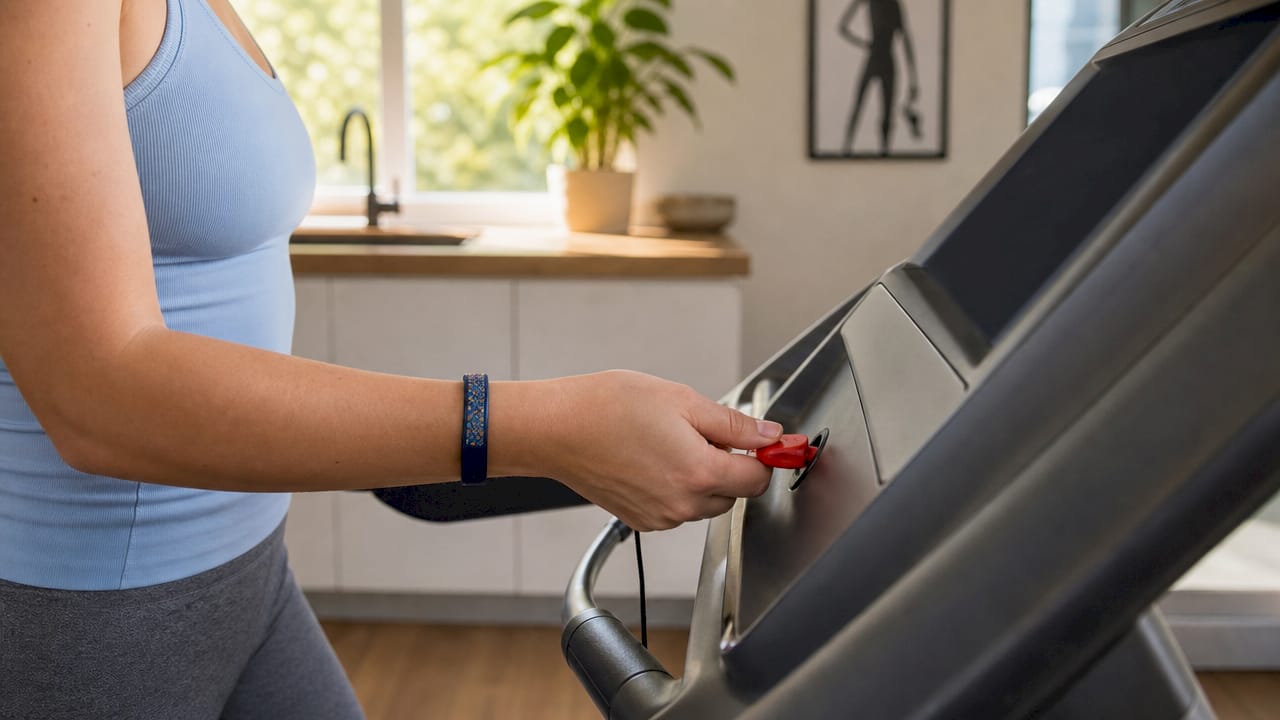
Dirty metal contacts on the safety key are just as problematic as a missing one. Wipe both the key's metal clip and the console slot with a dry cloth. Corrosion or sweat buildup on those contacts breaks the electrical signal even when the key appears fully inserted. Console error beeps like E1 or E6 often point directly to safety key detection problems, so check your user manual's beep code list before assuming a deeper fault.
Follow these steps in order to clear safety key and power switch issues:
- Remove the safety key completely, wipe the metal contacts clean, and reinsert it firmly until you feel or hear a click.
- Locate the physical power switch on the treadmill's base or rear frame and confirm it is in the ON position.
- Unplug the treadmill, wait 60 seconds to discharge the capacitors, then plug it back in. A 60-second power cycle resets electronic glitches in the console.
- Look for a small reset button on the treadmill's underside or rear panel, often labeled "Reset" or marked with a circle arrow symbol.
- Press the reset button with a pen tip, wait 10 seconds, then attempt to power on again.
Pro Tip: Never attempt to bypass or tape down the safety key. The machine will not start by design, and forcing it risks a runaway belt that can cause serious injury.
How to diagnose internal fuses, circuit breakers, and the motor control board
Internal components require more care, but they follow a clear logic. Always unplug the treadmill before removing any motor cover or accessing internal wiring. Wait at least 60 seconds after unplugging to let capacitors discharge fully before touching any component.
The internal fuse is the first internal checkpoint. Most treadmills place it near the power entry point inside the motor cover, often in a small glass or ceramic cartridge holder. A blown fuse shows a broken wire inside the glass tube or a blackened interior. Replace it only with a fuse of the exact same amperage rating printed on the original.
Checking the motor control board's LED indicator is the fastest way to split internal faults into two categories. No LED light means power is not reaching the board, pointing to the fuse, power switch, or incoming wiring. A lit LED with no console response points to a console or communication cable fault, not the board itself.
| Symptom | Most likely cause | Next step |
|---|---|---|
| No LED on motor control board | Blown fuse or failed power switch | Replace fuse, test power switch continuity |
| LED on, console blank | Console cable or console failure | Reseat console wire harness |
| Breaker trips immediately on startup | Electrical short in motor or board | Stop testing, call a technician |
| Burning smell with no power | Shorted motor winding or board | Stop testing immediately |
Loose or corroded wiring at circuit breaker terminals causes overheating and power failures. Even a small increase in resistance at a terminal connection generates enough heat to damage surrounding components over time. Use a multimeter set to continuity mode to test each wire connection from the power entry to the board.
Stop all testing immediately if you detect sparks, a burning smell, or grinding sounds. Continuing to power the machine in this condition worsens motor control board and motor damage and creates a fire risk.
Pro Tip: Take a photo of all wiring connections before disconnecting anything inside the motor cover. Reconnecting wires to the wrong terminals is a common mistake that creates new faults.
What to check when the treadmill powers on but still won't start
Some treadmill electrical issues sit between a dead machine and a running one. The console lights up, the display shows numbers, but pressing Start does nothing. This symptom points to wiring, communication cables, or a speed sensor fault rather than a power supply problem.
- Inspect the wire harness running from the console down the upright to the motor cover. Look for pinched, frayed, or disconnected cables.
- Reseat every connector at both ends of the console cable. Connectors work loose from vibration over months of use.
- Check for error codes like E1 or E6 on the console display. Write down the exact code and look it up in your model's manual before replacing any part.
- Locate the speed sensor on the front roller and confirm its wire is connected and the sensor sits within 3–5 millimeters of the magnet on the roller.
- If the belt moves briefly then stops, the motor drive circuit or speed sensor is the likely fault, not the console.
| Symptom | Likely component | DIY fix possible? |
|---|---|---|
| Console lights, Start does nothing | Safety key or console cable | Yes, reseat key and cable |
| Belt moves 1–2 seconds then stops | Speed sensor or motor drive | Partial, check sensor gap |
| Error code on display | Varies by code | Yes, consult manual |
| Console completely blank, board LED lit | Console or console cable | Yes, reseat harness |
| Board LED off, console blank | Fuse or power switch | Yes, replace fuse |
Skipping the cable inspection and jumping straight to ordering a new console or motor control board is the most expensive mistake in treadmill troubleshooting. A loose harness connector costs nothing to fix. A replacement console for a NordicTrack or ProForm treadmill can run $150–$300 or more.
Safe practices every owner should follow during power diagnostics
Safe troubleshooting protects both you and the machine. Unplugging before inspecting any internal component is non-negotiable. Electricity stored in capacitors can deliver a shock even after the machine appears off.
- Unplug the treadmill before removing any cover panel or touching internal wiring.
- Wait a full 60 seconds after unplugging before reaching inside the motor compartment.
- Stop all testing if you smell burning, see sparks, or hear grinding. These are signs of serious electrical shorts that worsen with each restart attempt.
- Never plug a treadmill into a GFCI outlet or surge protector as a permanent setup.
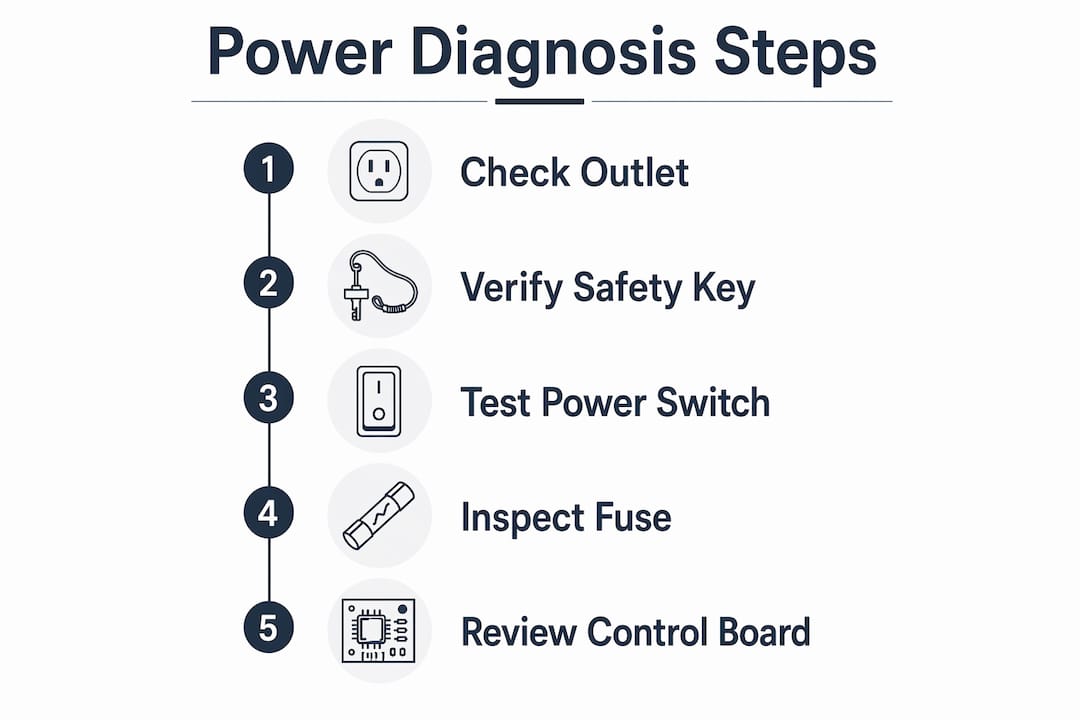
- Follow the power path in order: outlet, cord, power switch, safety key, internal fuse, motor control board. Skipping steps leads to replacing the wrong part.
Pro Tip: Keep a maintenance log for your treadmill. Note any unusual noises, speed hesitation, or burning smells during workouts. These pre-failure signs often appear weeks before a complete power failure, and catching them early prevents a much larger repair bill.
The single most protective habit in treadmill ownership is paying attention to changes in how the machine sounds and feels during normal use.
Key Takeaways
A systematic power path diagnosis, starting at the outlet and ending at the motor control board, resolves most treadmill power failures without replacing expensive parts.
| Point | Details |
|---|---|
| Start at the outlet | Confirm wall power before opening any panel or testing internal components. |
| Safety key is the top culprit | Clean the key's metal contacts and reseat it firmly before any other internal check. |
| Read the LED indicator | No light on the motor control board means a power input fault; light on with no console means a wiring or console fault. |
| Stop at warning signs | Sparks, burning smells, or immediate breaker trips require professional service, not more resets. |
| Follow the power path in order | Skipping steps causes unnecessary part replacements and higher repair costs. |
What I've learned from watching owners troubleshoot treadmill power problems
The most common mistake I see is owners jumping straight to the motor control board after a treadmill stops turning on. They order a $200 replacement board, install it, and the machine still does not start. The actual problem was a dirty safety key contact or a tripped GFCI outlet that took 30 seconds to fix.
What seems like a sudden breakdown almost always follows weeks of warning signs like speed hesitation or burning smells that owners write off as normal. Those signs are the machine telling you something is wrong before it goes completely dark. Paying attention to them is the cheapest repair you will ever make.
The power path approach works because electricity cannot skip steps. If the outlet has power and the cord is intact, the problem is downstream. If the board LED is lit, the problem is not the board. Logic, not guesswork, is what gets a treadmill running again. That said, if your breaker trips the moment you plug in the machine, stop. Recurring breaker trips signal a short in the motor windings or control board that gets worse with every restart attempt. That is the point where DIY ends and professional service begins.
— Steve
When Texastreadmillrepair can take it from here

Some power failures go beyond what a multimeter and a replacement fuse can fix. Motor control board failures, shorted motor windings, and damaged wiring harnesses require a certified technician with the right diagnostic tools. Texastreadmillrepair sends experienced technicians directly to your home or gym across South Texas, with same-week treadmill repair appointments available for most locations. Flat-rate pricing means you know the cost before any work begins, and every repair comes with a 90-day warranty on parts and labor. If you are unsure whether your machine is worth fixing, the repairable vs. unrepairable guide gives you a clear framework before you spend a dollar.
FAQ
What is the first step in treadmill won't turn on diagnosis?
Confirm the wall outlet has power by plugging in a different device, then check for a tripped GFCI outlet or circuit breaker before inspecting anything on the treadmill itself.
Why does my treadmill trip the circuit breaker immediately?
Immediate and recurring breaker trips indicate a serious electrical short in the motor windings or motor control board. Stop resetting and contact a technician, as continued attempts worsen the damage.
Can a dirty safety key really stop a treadmill from starting?
Yes. The safety key's metal contacts collect sweat and corrosion that break the start signal. Wiping the contacts clean and reseating the key firmly resolves many no-start calls without any parts replacement.
What does the motor control board LED tell me during diagnostics?
No LED light means power is not reaching the board, pointing to a fuse, power switch, or cord fault. A lit LED with a blank console points to a console cable or console failure instead.
Should I use a surge protector with my treadmill?
No. Treadmill motors generate electrical noise that falsely trips surge protectors and GFCI outlets. Plug your treadmill directly into a dedicated wall outlet for reliable power delivery.