
That sudden lurch underfoot when your treadmill belt folds or gathers beneath your stride is more than annoying. It's a safety hazard. The technical term for this is belt tracking failure or belt fold, and understanding why treadmill belt bunches underfoot is the first step to fixing it without guessing. Most people assume it's one simple problem with one simple fix. The reality is that belt bunching is almost always the result of two or three mechanical conditions compounding each other, and treating only one rarely solves it for good.
Table of Contents
- Key Takeaways
- Why treadmill belt bunches underfoot: the mechanical causes
- How deck condition and lubrication affect belt behavior
- How to diagnose treadmill belt issues with practical tests
- Maintenance best practices to prevent belt bunching
- When to call a professional for belt repair
- My honest take on treadmill belt care
- Get your treadmill running right with Texastreadmillrepair
- FAQ
Key Takeaways
| Point | Details |
|---|---|
| Loose tension is the top cause | If the belt lifts more than 4 inches at center, it's too loose and will bunch under load. |
| Misalignment accelerates damage | A drifting belt rubs side rails, causing uneven wear and folding failures if not corrected early. |
| Lubrication prevents heat-related bunching | A dry deck creates friction that causes the belt to stick and fold when stepped on. |
| Diagnosis follows a specific order | Check tension first, then alignment, then lubrication, then the drive system. |
| Prevention beats repair | Routine lubrication and tension checks every three months can prevent most belt bunching issues. |
Why treadmill belt bunches underfoot: the mechanical causes
The most direct answer to what causes treadmill belt bunching is incorrect belt tension. When the walking belt is too loose, it has nowhere to go when your foot applies downward pressure. Instead of staying flat against the deck, it folds or gathers. Belt tension that's too loose creates instability and bunching, and the standard field test is simple: lift the belt at the center. If it rises more than about 4 inches, you need to tighten it.
That said, tension is only one piece of the puzzle. Here are the mechanical factors that commonly work together to cause belt bunching:
- Loose or uneven belt tension. A belt that's too slack folds under foot pressure. Uneven tension, where one side is tighter than the other, causes the belt to track sideways and bunch at the edges.
- Belt misalignment. When the belt drifts to one side, it rubs against the side rails. A drifting belt causes accelerated edge wear and can fold or bunch at the point of friction.
- Worn or damaged rollers. The front and rear rollers guide the belt's path. Flat spots, worn bearings, or debris on a roller cause uneven belt movement, which leads to tracking problems and bunching.
- Stretched or glazed belt surface. Over time, the belt material loses elasticity. A glazed or aged belt compromises smooth movement and increases the risk of slipping and bunching, especially at higher speeds.
- Rear roller misadjustment. Uneven rear roller adjustment causes the belt to track off-center, and correcting it requires small, equal turns on both sides of the adjustment bolt.
These factors rarely show up alone. A slightly loose belt combined with a mildly worn roller creates a compounding problem that gets worse with every workout.
Pro Tip: Before adjusting anything, mark the center of your belt with a piece of tape and watch where it sits after five minutes at a slow speed. If it drifts left or right, misalignment is part of your problem.
How deck condition and lubrication affect belt behavior
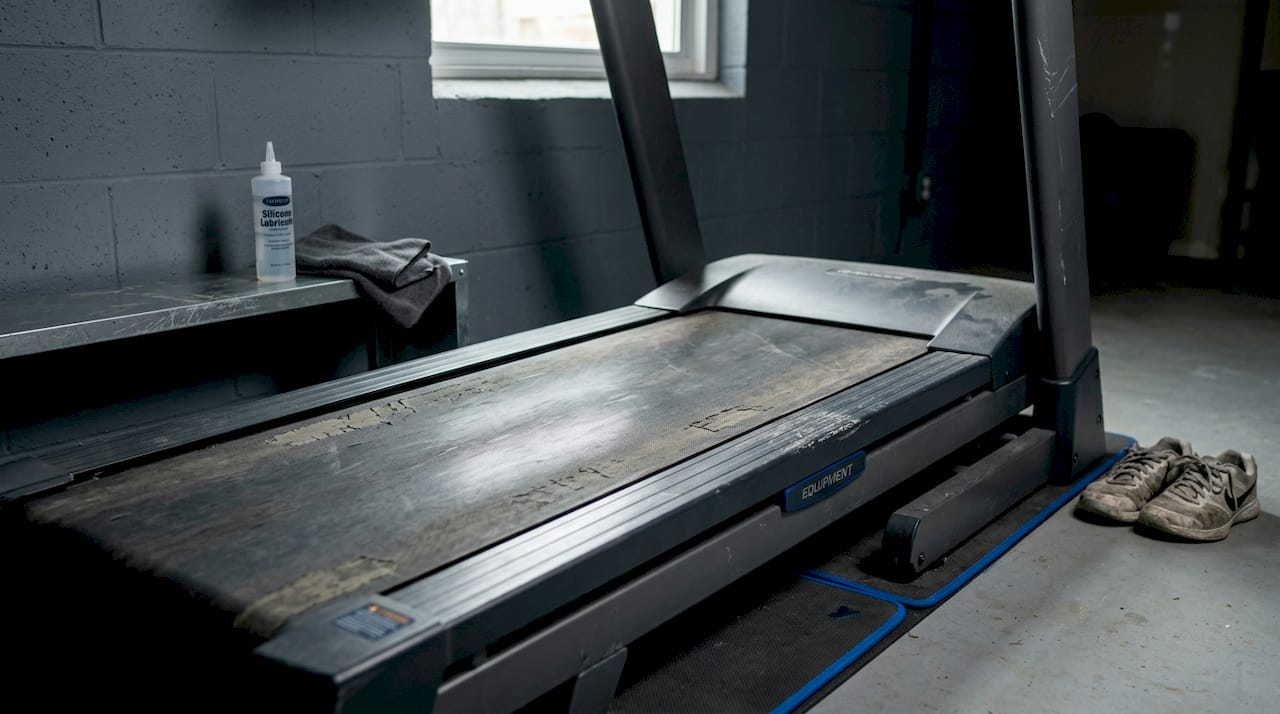
A dry treadmill deck is one of the most underestimated causes of belt bunching, and most home users never think to check it. When the deck lacks proper lubrication, friction between the belt's underside and the deck surface increases dramatically. That friction causes heat buildup, and higher friction from lack of lubrication leads to the belt sticking, buckling, or folding under load, particularly when you step on it at full weight.
Think of it this way: lubrication isn't just about making the belt feel smooth. It acts as a protective layer that keeps the belt moving freely even under the pressure of your bodyweight. Without it, the belt hesitates for a fraction of a second each time you step down, and that hesitation is what causes the fold.
Here's how to assess and address your deck's condition:
- Stop the treadmill and lift the belt at the center. Slide your hand along the underside of the belt. It should feel slightly slick. If it feels dry, rough, or warm, lubrication is overdue.
- Check for deck scoring or grooves. Run your fingers along the deck surface. Deep grooves or rough patches mean the deck itself is worn and needs replacement, not just lubrication.
- Apply silicone-based lubricant down the center of the deck. Most manufacturers recommend 100% silicone treadmill lubricant. Apply it in a thin line down the center of the deck, under the belt, on both sides of center.
- Run the treadmill at a slow speed for two minutes. This distributes the lubricant evenly across the deck surface before you use it at full speed.
Pro Tip: Never use WD-40 or petroleum-based products on a treadmill deck. They degrade the belt material and can void your warranty. Stick to 100% silicone lubricant specifically made for treadmills.
A worn deck combined with a dry surface is a double problem. The deck's protective coating wears away over time, and once it's gone, even fresh lubrication won't fully compensate. If you notice the belt bunching again within days of lubricating, the deck may need replacement.
How to diagnose treadmill belt issues with practical tests
Experienced technicians follow a specific diagnostic order when dealing with treadmill belt issues: check tension first, then tracking, then lubrication, and only then look at the drive system. This sequence saves time because each step rules out the most common causes before moving to the more complex ones.
Here's how to run through that sequence yourself:
- Tension test. With the treadmill off and unplugged, lift the belt at the midpoint. More than 4 inches of lift means it's too loose. Less than 2 inches means it may be too tight. Both extremes cause problems.
- Tracking observation. Turn the treadmill on at the lowest speed and watch the belt from behind. It should run centered. If it drifts to one side, the rear roller needs adjustment.
- Friction and heat check. After a short run, carefully touch the deck surface through the belt opening at the side. Excessive warmth points to a lubrication problem.
- Load test. Step on the belt at low speed and feel for any hesitation, slipping, or bunching. Belt bunching noticed upon stepping or at higher speeds usually indicates traction loss or drive torque problems.
- Drive belt inspection. If the belt bunches specifically when you apply body weight and the motor sounds like it's straining, the drive belt may be loose or worn. A broken or loose drive belt causes erratic roller movement and belt bunching under load.
| Symptom | Most Likely Cause | First Action |
|---|---|---|
| Belt bunches when stepping on it | Loose tension or dry deck | Tension check, then lubricate |
| Belt drifts to one side | Rear roller misalignment | Adjust rear roller evenly |
| Belt slips at higher speeds | Worn belt or loose drive belt | Inspect belt surface and drive belt |
| Treadmill makes grinding noise | Worn roller bearings | Inspect and replace rollers |
| Belt feels hot after short use | Insufficient lubrication | Lubricate deck immediately |
Maintenance best practices to prevent belt bunching
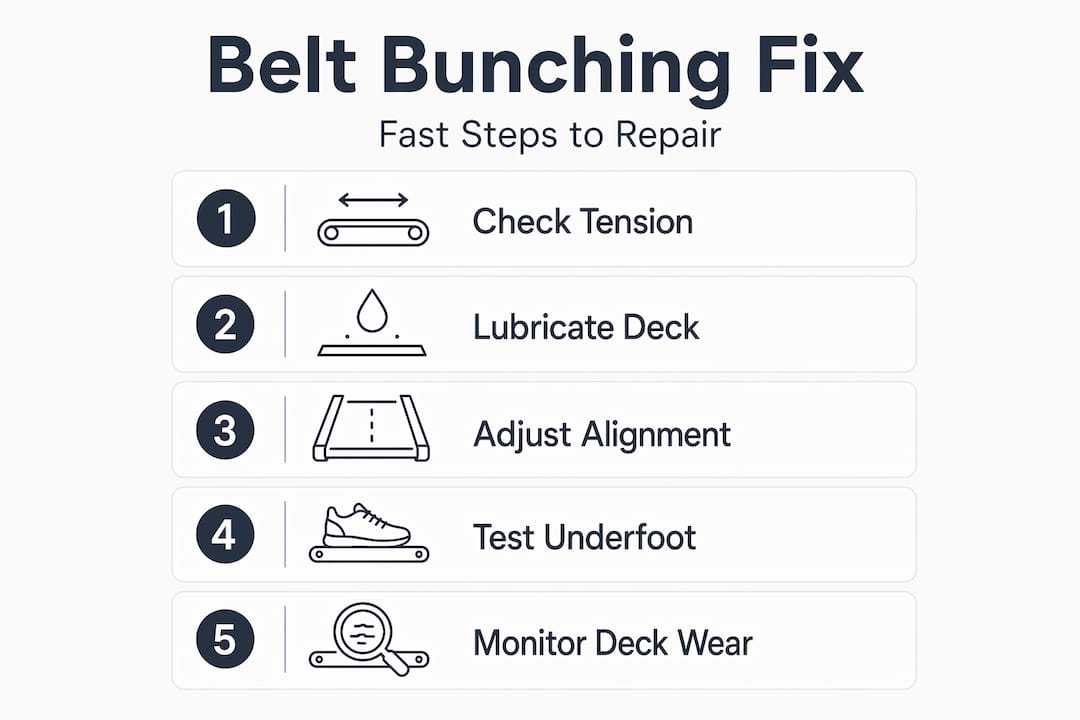
Reactive fixes work, but a consistent maintenance routine is what keeps belt bunching from coming back. The goal is to catch small issues before they compound into the kind of multi-factor problem that's harder to resolve.
| Maintenance Task | Frequency | Why It Matters |
|---|---|---|
| Deck lubrication | Every 3 months or 150 miles | Prevents friction-related bunching and heat damage |
| Belt tension check | Every 3 months | Keeps belt stable and reduces fold risk |
| Belt tracking inspection | Monthly | Catches misalignment before it causes edge wear |
| Roller inspection | Every 6 months | Identifies flat spots or bearing wear early |
| Full belt replacement | Every 3 to 5 years | Prevents glazed surface from causing slipping |
A few habits make a real difference. Always center yourself on the belt when walking or running. Consistently running off-center puts uneven lateral pressure on the belt, which accelerates misalignment. Avoid using the treadmill at maximum speed for extended periods if the belt is already showing signs of wear. And never ignore a treadmill slipping problem, because a belt that slips today will bunch tomorrow.
Maintaining proper belt tension means staying within the manufacturer's recommended range. Overtightening is not a solution. An overly tight belt increases motor strain and can cause erratic movement that looks and feels like bunching, just from the opposite cause. The sweet spot is a belt that lifts 2 to 3 inches at center and runs without slipping under load.
When to call a professional for belt repair
There's a clear line between what a home user can fix and what requires a certified technician. If you've adjusted tension, corrected alignment, and lubricated the deck and the belt still bunches, you've moved past the DIY threshold.
Watch for these indicators that professional repair is the right call:
- The belt continues to drift after multiple rear roller adjustments
- You hear a grinding or squealing noise that persists after lubrication
- The motor sounds like it's laboring or surging at consistent speeds
- The belt bunches specifically under body weight but runs fine unloaded, which points to a drive belt or motor issue
- The deck shows deep grooves or the belt surface is visibly glazed or cracked
Continuing to use a treadmill with unresolved belt issues is a real safety risk. A belt that folds underfoot at running speed can cause a fall. Beyond safety, running a treadmill with a dry deck or a strained motor accelerates damage to components that cost significantly more to replace than a service call.
Professional technicians bring diagnostic tools and replacement parts that make the job faster and more accurate. They can also catch secondary damage, like motor wear caused by months of running with a too-tight belt, that a visual inspection at home would miss.
My honest take on treadmill belt care
I've seen the same pattern repeat itself more times than I can count. Someone notices their belt bunching, tightens it a little, and calls it done. Two months later, they're back with a worn deck, a glazed belt, and a motor that's been running under strain the whole time. The tightening fixed the symptom for a few weeks but didn't address why the belt got loose in the first place.
In my experience, most home treadmill users treat their machine like a car they never service until the check engine light comes on. The difference is that a treadmill gives you warning signs well before it fails. A little hesitation underfoot, a slight drift to one side, a deck that feels warmer than usual after a run. These are the signals worth paying attention to.
What I've found actually works is treating lubrication and tension checks as a calendar task, not a reaction to a problem. Set a reminder every three months. It takes ten minutes. That ten minutes prevents the kind of compounding failure that turns a $50 service call into a $300 repair.
My take: don't be afraid to do the basic checks yourself, but know when to hand it off. If you've worked through the diagnostic steps and the problem persists, a professional will find the real cause faster than another round of guessing.
— Myles
Get your treadmill running right with Texastreadmillrepair

If you've worked through the tension checks, alignment adjustments, and lubrication steps and your belt is still bunching, it's time to bring in a certified technician. Texastreadmillrepair serves homeowners and gym owners across South Texas with same-week appointments and flat-rate pricing, so you know exactly what you're paying before the work starts. Their technicians come directly to you, handling everything from belt tension and alignment and lubrication repairs to drive belt replacement and motor diagnostics. Every repair comes with a 90-day warranty on parts and labor. Whether you're in Mission, Brownsville, Laredo, or anywhere across the region, Texastreadmillrepair has you covered.
FAQ
What causes a treadmill belt to bunch underfoot?
Belt bunching is most commonly caused by loose belt tension, deck misalignment, or insufficient lubrication. These factors often combine, so fixing only one may not fully resolve the problem.
How do I know if my treadmill belt tension is too loose?
Lift the belt at the center of the deck. If it rises more than 4 inches, the tension is too loose and needs to be tightened using the rear roller adjustment bolts.
Can a dry deck cause the belt to fold or bunch?
Yes. A dry deck increases friction between the belt and deck surface, which causes the belt to stick and fold under body weight, especially during normal walking or running.
How often should I lubricate my treadmill deck?
Most manufacturers recommend lubricating the deck every three months or every 150 miles of use, whichever comes first, using 100% silicone treadmill lubricant.
When should I stop DIY fixes and call a technician?
If belt bunching persists after adjusting tension, correcting alignment, and lubricating the deck, a professional inspection is warranted. Continued use with unresolved belt issues risks both injury and additional mechanical damage.