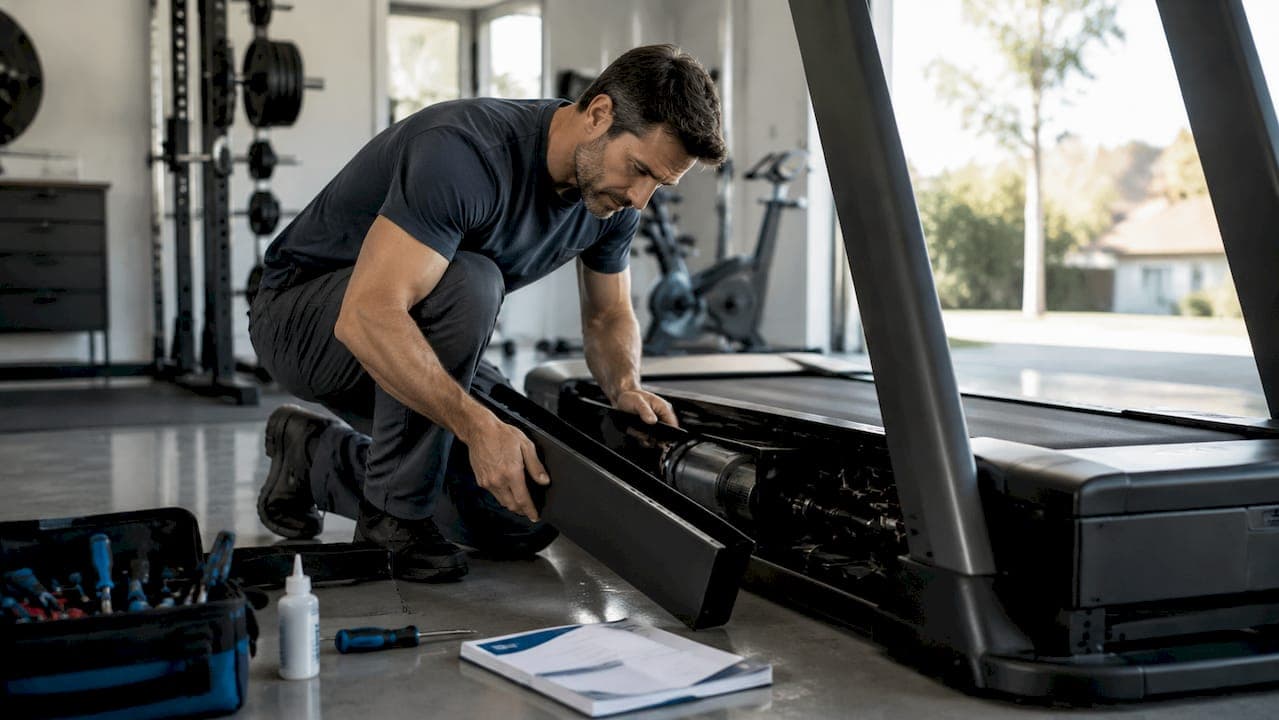
Recurring treadmill problems are defined by one root cause: fixing the symptom while leaving the underlying mechanical or maintenance failure untouched. A treadmill that stops after 10 to 15 minutes due to friction on a completely dry deck will stop again the moment you restart it, because the deck was never lubricated. The same logic applies to belt tension, dust buildup, and motor strain. Why treadmill problems keep returning is not a mystery. It is a predictable pattern that technicians see every week, and it is almost always preventable.
Why do treadmill problems keep returning?
Most treadmill owners treat recurring failures as bad luck or a sign the machine is worn out. Technician diagnostics tell a different story. Many recurring failures are misdiagnosed as electrical problems when the true cause is repetitive friction and overload stress on the motor and belt system. The machine is not broken beyond repair. It is being asked to run under conditions that guarantee failure.
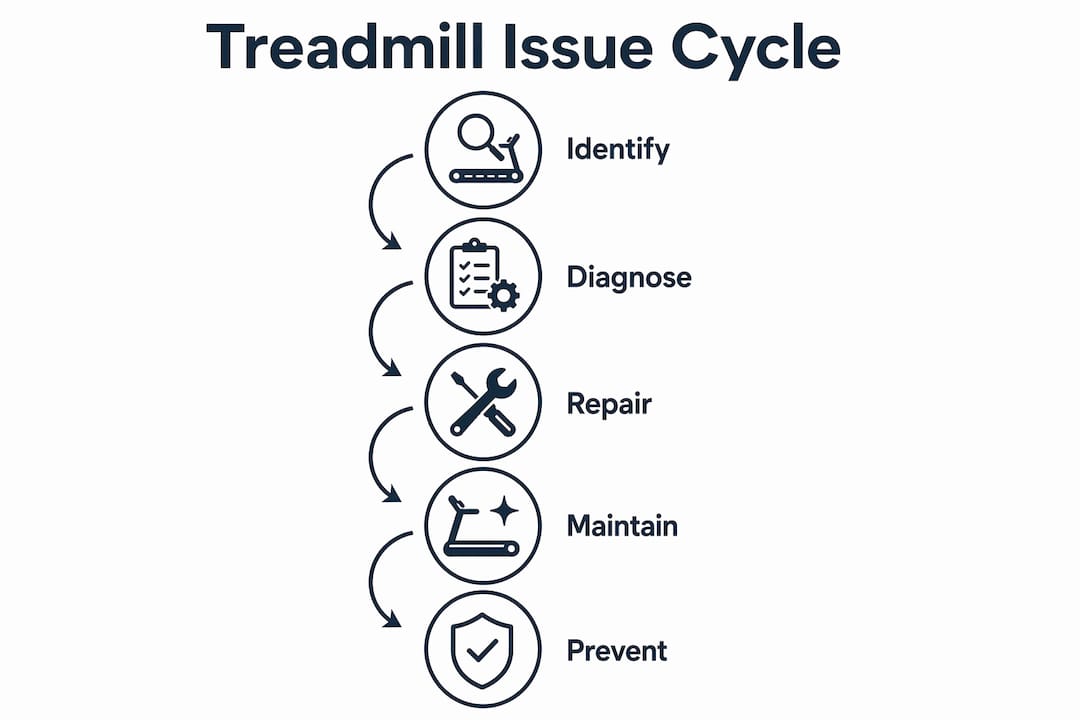
The three most common root causes are friction from inadequate lubrication, incorrect belt tension, and heat from dust-restricted airflow. Each one creates a cycle. You fix the visible symptom, the machine runs for a few weeks, and then the same error or shutdown returns. That cycle continues until the underlying condition is corrected.

Scheduled preventive maintenance focused on lubrication and cleaning reduces failures by 50 to 60 percent. That number matters because it means the majority of repeat service calls are avoidable with basic, consistent care.
What are the most common treadmill problems that tend to recur?
Understanding which problems recur most often helps you target the right fix instead of guessing. These are the patterns certified technicians diagnose most frequently:
- Belt slipping or hesitating mid-workout. The belt loses grip during a run, the machine pauses, and you assume it is a motor issue. The actual cause is usually low lubrication or incorrect tension. A belt that is too loose slips under load. A belt that is too tight creates friction that forces the motor to work harder. Both conditions repeat until tension and lubrication are corrected together.
- Overheating and automatic shutdown. The treadmill stops unexpectedly after 20 to 30 minutes, cools down, and then runs again. This is a thermal protection response. Dust buildup restricts motor cooling airflow, causing recurrent overheating even after the machine appears to have been fixed. Cleaning the motor compartment every few weeks is the only reliable solution.
- Belt drift and uneven wear. The belt migrates to one side during use, creating edge wear on the belt and deck. This is a recurring treadmill belt wear cause that compounds over time. Misalignment combined with an unstable placement surface accelerates the damage.
- Mid-workout stops that seem random. Not every unexpected shutdown is mechanical. Safety key and intermittent power contact faults cause the same symptom as a failing motor or control board. Verifying the safety key connection before replacing parts prevents unnecessary repairs and repeat service calls.
Each of these issues shares one trait: they return when only one variable is corrected instead of the full system.
Why do maintenance lapses cause treadmill problems to come back?
The most common reason a treadmill stops unexpectedly two months after a repair is that the repair addressed the broken part but not the maintenance gap that caused it. Lubrication is the clearest example. Lubrication should occur every 3 months or every 40 to 90 hours of use, and skipping that interval creates a friction cycle that damages the deck, belt, and motor in sequence. Most owners lubricate once after a repair and then stop.
Incorrect lubricant selection compounds the problem. Using the wrong lubricant on a self-lubricating belt causes lasting damage and voids warranties, creating recurring issues that look like manufacturing defects. Always confirm whether your belt is self-lubricating before applying any product.
Maintenance lapses that directly cause recurrence include:
- Skipping lubrication past the 90-hour mark, which allows the deck surface to dry out and generate heat
- Failing to clean motor vents and the compartment beneath the motor cover, which traps heat and causes repeated shutdowns
- Ignoring belt retensioning after the initial break-in period, which allows stretch-related slippage to develop
- Over-tightening the belt during adjustment, which increases motor workload by 30 to 40 percent and causes heat damage and recurring electronic failures
Pro Tip: Set a phone reminder every 90 days to lubricate the belt and wipe down the motor vent area. Pairing both tasks in one session takes under 10 minutes and eliminates the two most common causes of repeat failures.
Tracking your maintenance history is not just for commercial gyms. Consistent maintenance tracking reduces recurring breakdowns by giving you a clear record of what was done and when, so nothing gets skipped during a busy month.
How do belt tension and alignment mistakes lead to repeated failures?
Belt tension is the adjustment most owners get wrong, and it is the one that causes the widest range of recurring treadmill problems. The error is almost always overcorrection. You feel the belt slipping, tighten both rear roller bolts several turns, and the slipping stops. Three weeks later the motor runs hot, the belt feels stiff, and the machine shuts down mid-workout. You have traded one problem for another.
The correct method uses incremental quarter-turn adjustments paired with full belt cycles between each adjustment. This approach prevents overcorrection and gives the belt time to settle before you evaluate the result. The Horizon Fitness Elite T4000 manual specifically advises this method to prevent recurring slipping and belt drift.
Here is how tension and alignment errors create a recurrence cycle:
- Belt slips during a workout. Owner tightens both bolts equally without checking alignment.
- Over-tightening increases friction. Motor strain builds over several sessions.
- Machine shuts down from heat. Owner assumes the motor is failing.
- Motor or control board is replaced. Belt tension is not corrected.
- New component fails within weeks because the root tension problem was never fixed.
The comparison below shows how tension errors differ in their damage pattern:
| Tension problem | Primary symptom | Secondary damage |
|---|---|---|
| Belt too loose | Slipping and hesitation under load | Deck surface wear from belt movement |
| Belt too tight | Motor overheating and shutdown | Control board and electronic failures |
| Misaligned belt | Drift toward one side | Edge fraying and uneven deck wear |
Adjusting belt tension without correcting deck lubrication or alignment creates a recurrence trap where symptoms return after every minor fix. All three variables must be addressed together.
What environmental and usage factors accelerate recurring problems?
The environment your treadmill operates in and how hard you push it determine how fast problems return after a repair. These factors are frequently overlooked because they feel outside the machine itself, but technicians consistently link them to repeat premature motor and control board damage.
- Dust and debris accumulation. Dust and sweat residue around motor ventilation zones are the primary choke points for recurring overheating. A garage or basement installation without regular floor cleaning sends dust directly into the motor compartment. Cleaning the motor area every few weeks is the single most effective environmental control.
- Exceeding weight and incline load limits. Running at maximum incline at maximum speed for extended sessions pushes the motor beyond its design load. Technician observations consistently link overload usage patterns to repeat motor failures, especially on consumer-grade machines rated for moderate use.
- Unstable or uneven placement surfaces. A treadmill on a slightly uneven floor creates constant lateral stress on the frame and rollers. This worsens belt drift and accelerates wear on components that would otherwise last years. A rubber treadmill mat on a level surface solves this without any mechanical adjustment.
- High-intensity use without rest intervals. Continuous high-intensity sessions without allowing the motor to cool between workouts compound heat damage. This is especially true in South Texas climates where ambient temperatures in garages and home gyms run significantly higher than manufacturer test conditions.
Pro Tip: Place your treadmill on a dedicated rubber mat and check floor levelness with a smartphone level app before your first use. This one-time setup step eliminates a persistent source of belt drift and frame stress that no amount of tension adjustment will fix.
Treadmill overheating causes in home environments are often environmental rather than mechanical, which is why the same repair fails twice when the room conditions are not addressed.
What practices actually break the cycle of recurring treadmill failures?
Breaking the recurrence cycle requires a system, not a single fix. The following sequence addresses root causes rather than symptoms:
- Lubricate on a fixed schedule. Apply the correct lubricant every 3 months or 40 to 90 hours of use, whichever comes first. Confirm your belt type before applying any product. Self-lubricating belts require no treatment and will be damaged by added lubricant.
- Retension after the break-in period. New belts require retensioning after 20 to 30 miles of initial use to accommodate material stretch. Skipping this step is the leading cause of early slippage recurrence on machines that were correctly set up at purchase.
- Clean the motor compartment monthly. Remove the motor cover and use compressed air to clear dust from vents and the motor housing. Proper motor compartment cleaning reduces over 60 percent of premature electronic failures. This single task prevents more repeat service calls than any other maintenance step.
- Make incremental tension adjustments only. Use quarter-turn increments on rear roller bolts, run the belt for two minutes, and evaluate before adjusting again. Never tighten both sides without checking belt centering after each adjustment.
- Verify the safety key before any repair. A loose or worn safety key causes the same mid-workout stop as a failing motor. Check it first. Replacing components without ruling out the safety key leads to unnecessary costs and the same shutdown recurring after the repair.
- Track your maintenance schedule in writing. A simple log of lubrication dates, tension checks, and cleaning sessions gives you the data to identify patterns before they become failures.
For issues that return after two or more DIY repair attempts, professional diagnosis is the faster and cheaper path. Electrical faults, control board issues, and drive belt wear require tools and experience that go beyond standard owner maintenance.
Key takeaways
Recurring treadmill failures are caused by unresolved friction, incorrect belt tension, and dust-driven overheating. Fixing symptoms without addressing all three root causes guarantees the problem returns.
| Point | Details |
|---|---|
| Friction is the primary driver | Dry decks and skipped lubrication cause overheating cycles that repeat until the deck is properly treated. |
| Tension errors compound damage | Over-tightening increases motor load by 30 to 40 percent; use quarter-turn increments to avoid creating new failures. |
| Dust causes most shutdowns | Cleaning motor vents monthly eliminates over 60 percent of premature electronic failures in home treadmills. |
| Break-in retensioning is required | New belts stretch in the first 20 to 30 miles and must be retensioned to prevent early slippage recurrence. |
| System fixes beat single repairs | Addressing lubrication, tension, alignment, and cleaning together breaks the recurrence cycle permanently. |
What I've learned from treadmills that keep breaking
After years of diagnosing treadmills that owners have already "fixed" two or three times, the pattern is always the same. The repair was real. The root cause was not touched.
The most common version of this I see is a belt that slips, gets tightened, runs fine for six weeks, and then the motor burns out. The owner replaced the belt. They tightened the tension. They did everything the forum said to do. But the deck was never lubricated, so the friction load on the motor never dropped. The new belt ran on the same dry surface and generated the same heat. The motor was always going to fail.
What I tell every client is this: your treadmill is giving you warnings before it fails. A slight hesitation at the start of a run, a faint burning smell after 20 minutes, a belt that drifts a quarter inch to the left. These are not random. They are the machine telling you exactly which system is under stress. Most people ignore them until the machine stops completely, and by then the repair cost is three times what it would have been.
The other thing I see constantly is the wrong lubricant. Someone reads that their treadmill needs lubrication, buys a general-purpose silicone spray, and applies it to a self-lubricating belt. The belt swells, the deck surface becomes uneven, and the warranty is void. The hidden damage from that single mistake takes months to show up fully.
My honest advice: treat your treadmill like a car. You would not skip oil changes and then wonder why the engine seized. The same logic applies here, and the maintenance is far simpler.
— Steve
Stop the cycle with professional treadmill repair
If your treadmill has stopped mid-workout more than twice after repairs, the underlying cause has not been found yet. Texastreadmillrepair sends certified technicians directly to your home or gym in South Texas, with same-week appointments and flat-rate pricing so you know the cost before the work begins. Every repair includes a 90-day warranty on parts and labor.

Start by reviewing the treadmill repair services Texastreadmillrepair offers, from full diagnostics to belt replacement and motor repair. If you are unsure whether your machine is worth repairing, the repairable vs. unrepairable guide gives you a clear framework before you spend a dollar. For machines throwing error codes, the treadmill error codes resource explains what each code means and which ones signal a recurring root cause.
FAQ
Why does my treadmill keep stopping mid-workout?
Recurring mid-workout stops are most commonly caused by overheating from dust-restricted airflow, a dry deck generating excess friction, or a loose safety key triggering the shutdown circuit. Check the safety key connection first, then inspect the motor vent area for dust buildup before assuming a mechanical failure.
How often should I lubricate my treadmill belt?
Lubricate every 3 months or every 40 to 90 hours of use, whichever comes first. Always confirm your belt type before applying lubricant, since self-lubricating belts are damaged by added product and will cause recurring performance issues if treated incorrectly.
What causes recurring treadmill belt wear?
Recurring belt wear is caused by misalignment, incorrect tension, and inadequate deck lubrication operating together. Correcting only one variable while leaving the others unaddressed creates a recurrence trap where the belt continues to wear unevenly despite repeated adjustments.
Can over-tightening a treadmill belt cause repeated failures?
Over-tightening increases motor workload by 30 to 40 percent, which generates heat damage and repeated electronic failures. Use quarter-turn increments on rear roller bolts and run the belt between each adjustment to avoid overcorrection.
When should I call a professional instead of fixing it myself?
Call a professional when the same problem returns after two DIY repair attempts, when the machine throws error codes you cannot clear, or when you smell burning from the motor compartment. These signs indicate a root cause that standard owner maintenance cannot resolve.