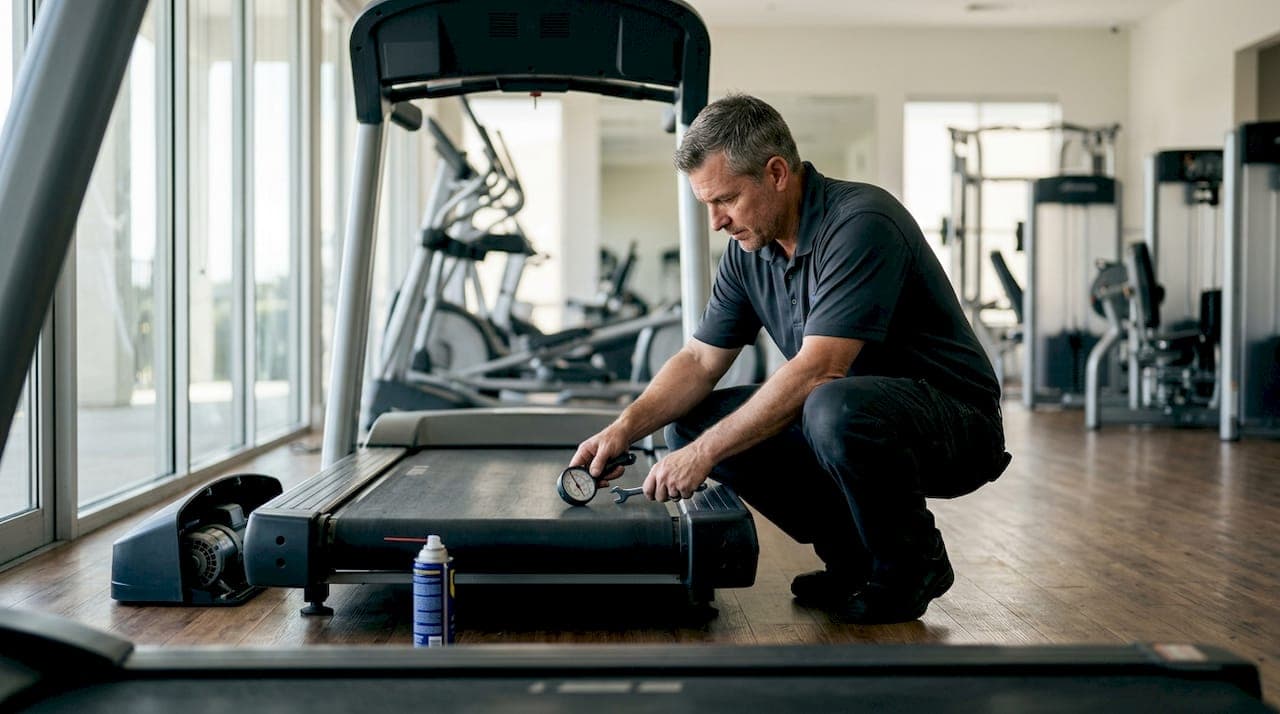
Treadmill resistance increase causes fall into two clear categories: mechanical faults inside the machine and user-driven settings that raise workout intensity. A tight or loose belt creates friction that strains the motor and makes every step feel harder than it should. Inadequate lubrication compounds that friction, wearing down the deck and pushing the motor toward overheating. On the user side, incline settings and handrail habits change how hard the workout feels without touching a single mechanical component. Knowing which category your problem falls into is the fastest path to a fix.
What mechanical factors cause increased treadmill resistance?
Mechanical resistance on a motorized treadmill is defined as friction-based drag that the motor must overcome to keep the belt moving at your chosen speed. It is not an adjustable setting. Motorized treadmills lack dedicated resistance controls; the resistance you feel comes entirely from the physical condition of the belt, deck, and motor system.
Belt tension problems
Belt tension is the single most common mechanical cause of abnormal resistance. A belt that is too tight increases friction against the deck surface, forces the motor to work harder, and generates heat that shortens motor life. A belt that is too loose slips under your foot, creates jerky motion, and produces the same motor strain through inconsistent load. Both conditions make the workout feel significantly harder than the speed setting suggests.
Lubrication failure
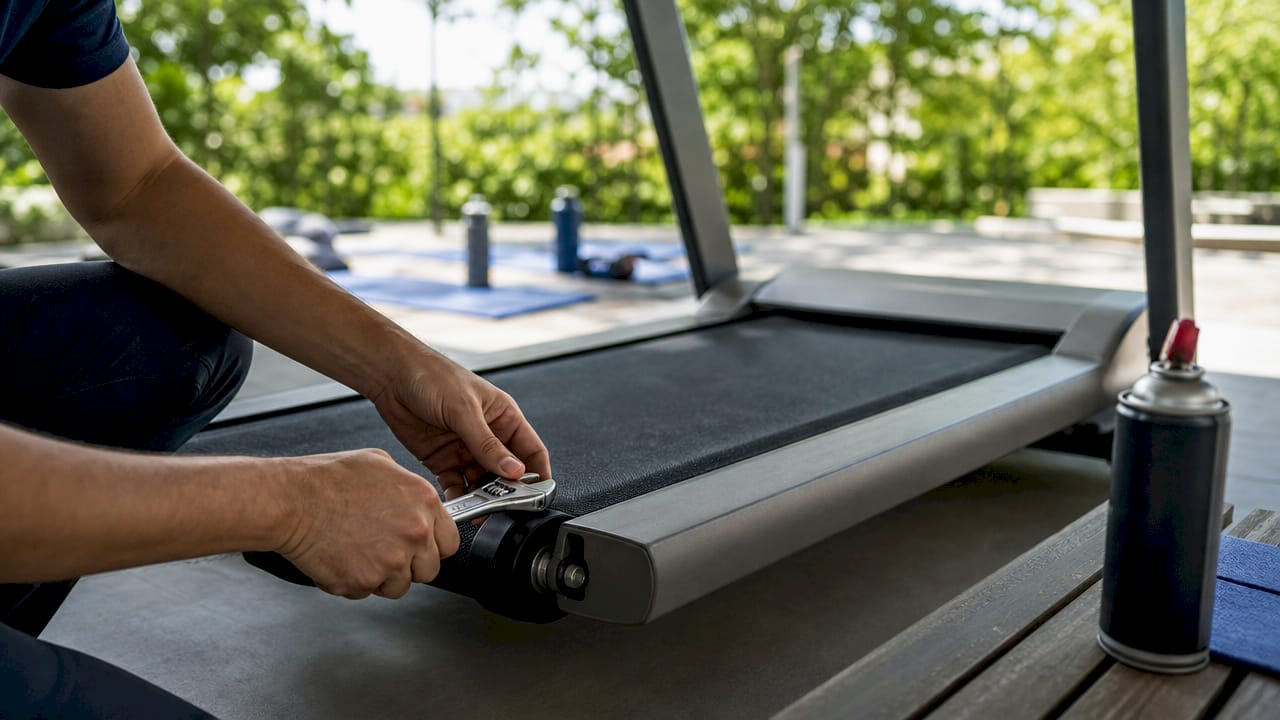
Deck lubrication is the most overlooked maintenance task on any treadmill. Neglecting lubrication increases friction between the belt and the deck board, making the belt harder to move and forcing the motor to draw more current. That extra current draw raises motor temperature and accelerates wear on both the motor and the controller board. Most manufacturers recommend lubrication every three to six months depending on usage frequency and ambient heat, which matters especially in South Texas climates where heat accelerates lubricant breakdown.
Deck wear and motor strain
A worn deck surface loses its smooth finish and grips the belt unevenly. That uneven grip creates resistance spikes mid-stride, which you feel as a slight drag or hesitation. Motor overload from increased resistance shows up as overheating, unexpected shutdowns, or a burning smell near the motor cover. These are not minor inconveniences. They are signals that the machine is working against itself.
Here are the primary mechanical causes at a glance:
- Overtightened belt: Increases deck friction and motor amperage draw
- Loose belt: Causes slipping and uneven load on the motor
- Dry deck: Raises surface friction and heat generation
- Worn deck board: Creates uneven resistance spikes during each stride
- Motor controller inefficiency: Reduces power delivery, making the belt feel sluggish
Pro Tip: Slide your hand under the center of the belt when the machine is off. You should be able to lift it about two to three inches. If it barely moves or lifts more than four inches, tension adjustment is overdue.
How do user settings and treadmill features affect perceived resistance?
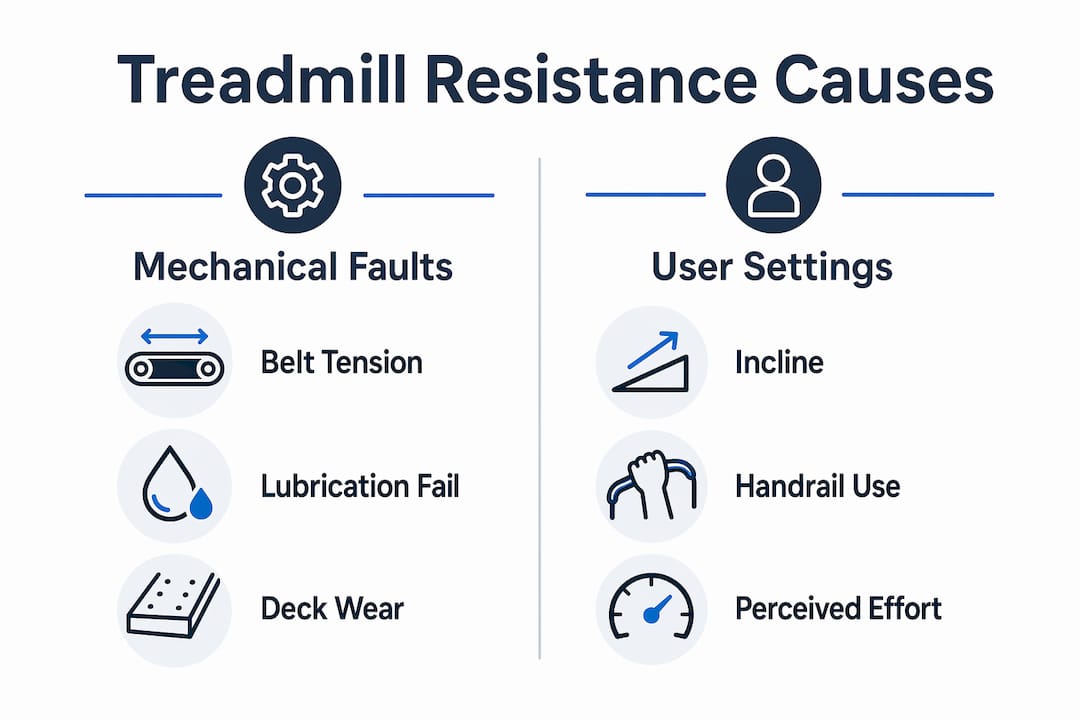
Perceived resistance is the effort level you feel during a workout. It does not always match the machine's mechanical condition. Two treadmill features drive perceived resistance more than any other: incline and speed.
Incline and muscle demand
Higher incline settings shift workload to the calves, glutes, and hamstrings, increasing energy use per step and making the workout feel significantly harder. This is intentional design, not a malfunction. Biomechanical studies recommend a 1.0–2.0% incline to match the energy expenditure of outdoor running, since treadmills eliminate natural air resistance. Every percentage point above that baseline adds measurable muscular demand.
The handrail mistake
Holding the handrails while running at incline is one of the most common user errors on any treadmill. Handrail use reduces leg workload by up to 20%, which means users compensate by setting a higher incline to feel challenged. That higher incline setting then creates a false impression of resistance when the real problem is posture and grip. Letting go of the rails immediately reveals the true effort level.
Here is how user behavior shapes perceived resistance:
- Set incline above 2% to intentionally increase workout intensity and muscle activation.
- Release the handrails to get an accurate read on how hard you are actually working.
- Reduce speed before raising incline to avoid overloading your joints and the motor simultaneously.
- Match incline to fitness level rather than copying a preset program that may not suit your current capacity.
- Use hands-free walking at high incline to build glute and hamstring strength without misleading resistance data.
Treadmill incline and mechanical resistance are separate systems. Confusing the two leads to poor training decisions and missed maintenance signals. If the machine feels hard at a flat setting and low speed, that is a mechanical problem, not a workout feature.
What are the signs that treadmill resistance is abnormally high?
Abnormal resistance has a distinct set of symptoms. Recognizing them early prevents minor friction issues from becoming motor failures.
Watch for these warning signs:
- Motor struggling audibly: A louder than normal hum or grinding sound at normal speeds signals excess load.
- Belt slipping or jerking: A slipping belt under your foot at consistent speed is a direct sign of tension or lubrication failure.
- Sudden speed drops: The belt slows noticeably when you step on it, even at low incline settings.
- Unexpected shutdowns: The machine cuts power mid-session as a thermal protection response to motor overheating.
- Burning smell: A smell near the motor cover or under the hood indicates the motor is drawing excessive current.
- Excessive fatigue at low settings: If a 3.0 mph flat walk leaves you winded, the machine is adding resistance the display is not showing.
Motor overload from unresolved resistance issues leads directly to treadmill motor failure, which is one of the most expensive repairs on any home unit. Catching the problem at the belt tension or lubrication stage costs a fraction of a motor replacement. The safety cut-off that shuts your machine down mid-run is not a glitch. It is the machine protecting itself from permanent damage.
Pro Tip: Run your treadmill at 3.0 mph with no one on it and watch the belt from the side. Any visible wobble, drift to one side, or speed fluctuation points directly to a tension or lubrication issue.
How do you fix and prevent unwanted treadmill resistance?
Fixing abnormal resistance follows a clear sequence. Start with the simplest cause and work toward the more complex.
-
Check belt tension first. Turn off and unplug the machine. Lift the center of the belt. Adjust the rear roller bolts a quarter turn clockwise to tighten or counterclockwise to loosen. Recheck lift height after each adjustment. Refer to your manufacturer's torque specification if listed in the manual.
-
Lubricate the deck. Apply 100% silicone lubricant under the belt along the center of the deck. Do not use WD-40 or petroleum-based products. These degrade the belt material and void most warranties. Spread the lubricant by running the belt at low speed for two minutes before stepping on it.
-
Inspect the deck surface. Run your hand along the underside of the belt and across the deck board. A rough or grooved deck surface needs replacement. A smooth deck with proper lubrication dramatically reduces motor load.
-
Test the motor controller. If belt tension and lubrication are correct but resistance remains high, the motor controller may be delivering inconsistent power. This requires a voltage test with a multimeter or a professional diagnosis.
-
Call Texastreadmillrepair for persistent issues. If the problem returns within days of a DIY fix, the root cause is deeper than surface maintenance. Recurring resistance problems often point to why treadmill problems keep returning in a cycle that only a certified technician can break.
Pro Tip: Mark your calendar for lubrication every 90 days if you use the treadmill daily. In South Texas heat, lubricant breaks down faster than the standard six-month interval most manuals recommend.
Key takeaways
Treadmill resistance increases from mechanical friction, belt tension faults, and lubrication failure, and each cause requires a specific fix before the motor sustains lasting damage.
| Point | Details |
|---|---|
| Belt tension is the top cause | A belt too tight or too loose creates friction that strains the motor and raises felt resistance. |
| Lubrication prevents most friction | Apply 100% silicone lubricant every 90 days to keep deck friction low and motor load stable. |
| Incline raises perceived effort | Higher incline increases muscle demand intentionally; this is not a mechanical fault. |
| Handrail use distorts resistance | Holding rails reduces leg effort by up to 20%, leading users to set inclines that feel artificially hard. |
| Motor symptoms signal urgency | Burning smells, shutdowns, and belt slipping mean mechanical resistance has already stressed the motor. |
What I have learned from years of watching treadmills fail
The pattern I see most often is a treadmill that has been quietly fighting itself for months before the owner notices. The belt gets a little dry, the friction climbs, the motor works harder, and the workout feels harder than it should. The owner assumes they are just getting tired. They push through. Then one day the machine shuts off mid-run or starts smelling like burnt plastic.
The frustrating part is that this entire sequence is preventable with a $10 bottle of silicone lubricant and a quarterly reminder on your phone. Most treadmill owners I talk to have never lubricated their deck. Not once. They treat the machine like a car with no oil change interval, and then wonder why the motor fails at three years instead of ten.
The incline confusion is also real. I have seen people set their treadmill to 12% incline, grab the rails, and then complain the machine feels sluggish. They are canceling out the incline benefit with their grip and then blaming the equipment. Using incline hands-free is not just better training. It gives you an honest read on whether the machine is working correctly.
My honest advice: if your treadmill feels harder than it used to at the same settings, do not assume you are out of shape. Check the belt and lubricate the deck first. If that does not fix it within a week, get a certified technician to look at the motor and controller. Catching a $50 belt adjustment before it becomes a $400 motor replacement is the smartest maintenance decision you can make.
— Steve
When Texastreadmillrepair can solve what DIY cannot
Treadmill resistance problems that return after a belt adjustment or lubrication are a sign the underlying cause has not been addressed.

Texastreadmillrepair sends certified technicians directly to your home or gym in South Texas, with same-week appointments and flat-rate pricing that removes the guesswork from repair costs. Every job comes with a 90-day warranty on parts and labor. Before you decide whether your machine is worth fixing, check the repairable vs unrepairable treadmill signs guide to understand exactly what you are dealing with. If the motor is already showing overload symptoms, a professional diagnosis now costs far less than a full replacement later. Texastreadmillrepair also handles treadmill repair services for belt tension, lubrication, motor controller issues, and more.
FAQ
What causes a treadmill to suddenly feel harder to run on?
Sudden resistance increase is most often caused by a dry deck, overtightened belt, or motor strain from accumulated friction. Check lubrication and belt tension before assuming a motor problem.
Does treadmill incline increase mechanical resistance?
No. Incline increases perceived effort by shifting workload to specific muscle groups, but it does not create mechanical friction inside the machine. Mechanical resistance comes from belt and deck condition.
How often should I lubricate my treadmill to prevent resistance buildup?
Lubricate the deck with 100% silicone lubricant every 90 days under daily use conditions, or every six months for lighter use. High-heat environments like South Texas require the shorter interval.
Can holding the handrails make my treadmill feel harder?
Holding handrails at incline reduces your leg workload by up to 20%, which causes users to set higher inclines to feel challenged. That higher incline then feels like abnormal resistance when the real issue is grip and posture.
When should I call a technician instead of fixing resistance myself?
Call a certified technician when resistance returns within days of a DIY fix, when the motor emits a burning smell, or when the machine shuts down unexpectedly. These symptoms point to motor overload that requires professional diagnosis.